


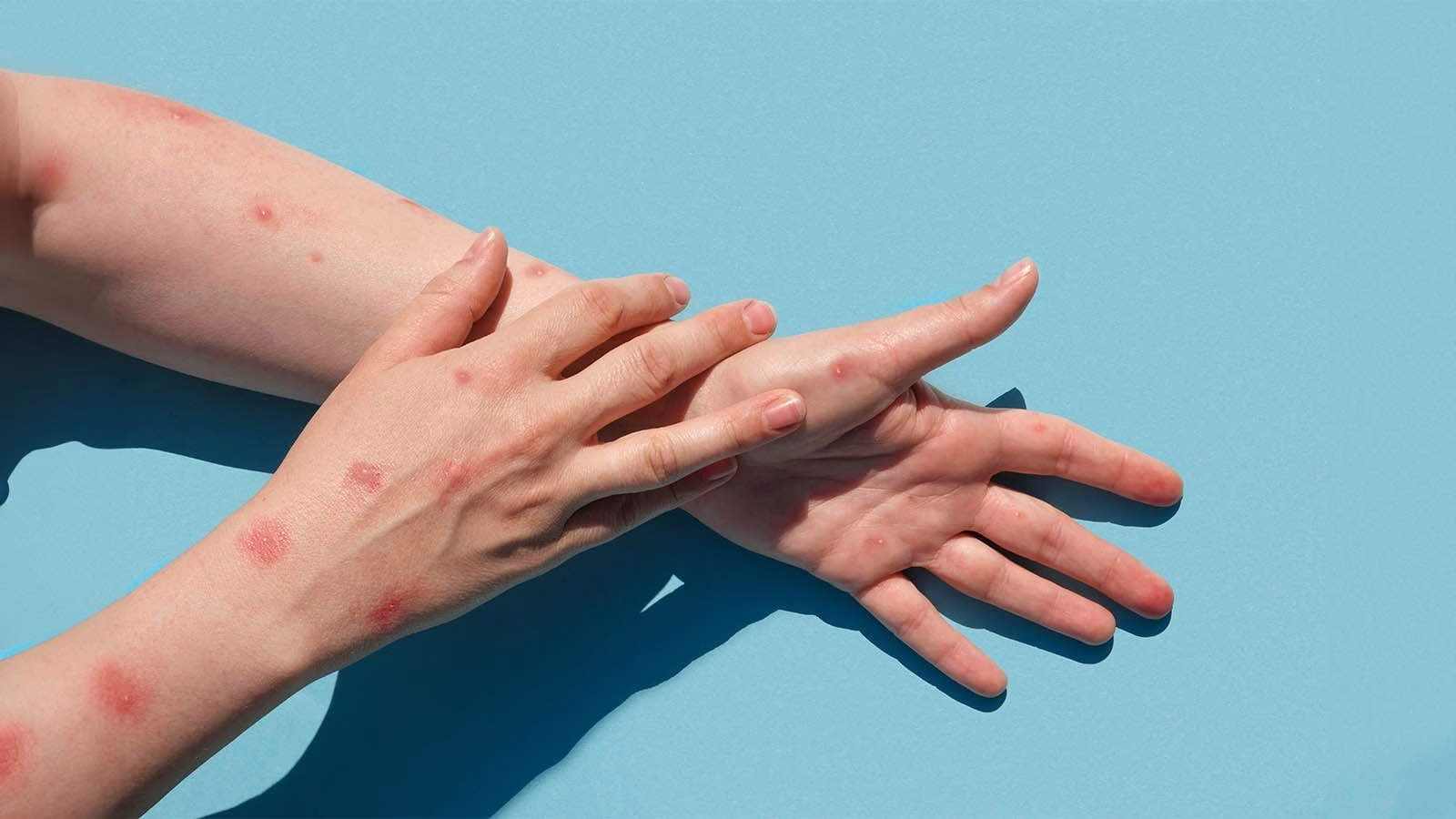
The study of monkeypox virus clades has become increasingly relevant in the realm of public health, particularly in light of recent outbreaks. Monkeypox, caused by the monkeypox virus (MPXV), presents two distinct clades that researchers analyze for better mpox diagnosis and control measures. The emergence of lineage B.1 within clade II has raised concerns about transmission patterns, especially given its significant human-to-human spread linked to sexual activity. Advanced techniques such as quantitative PCR monkeypox testing are essential for monkeypox clade differentiation, allowing for accurate identification of the virus in clinical samples. Understanding the nuances of these clades not only aids in effective surveillance but also enhances our knowledge of MPXV’s pathogenicity and response to interventions.
Exploring the variations of the monkeypox virus reveals important distinctions between the different groups of this zoonotic disease. Often referred to in academic and clinical circles as MPXV lineages, these categorizations help clarify issues related to mpox transmission dynamics and disease severity. Clade differentiation plays a crucial role in understanding outbreak developments, with recent identification of lineage B.1 underscoring the need for rapid monkeypox virus testing methodologies. Moreover, leveraging cutting-edge molecular techniques like multiplex quantitative PCR enhances our capacity for effective mpox diagnosis in diverse healthcare settings. Engaging with these aspects is vital as we navigate the complexities of this evolving viral threat.
Understanding Monkeypox Virus Clades and Their Impact
Monkeypox is a viral zoonosis caused by the monkeypox virus (MPXV), which has two main clades: clade I and clade II. Historically, clade I has been associated with more severe cases and a higher case-fatality ratio compared to clade II. Clade II has further distinctions, being divided into IIa and IIb. In recent studies, lineage B.1, a sub-lineage of clade IIb, emerged as the dominant strain, exhibiting significant human-to-human transmission, particularly in contexts involving close contact and sexual activity. Understanding these differences is crucial for public health responses, vaccination strategies, and treatment protocols that may vary significantly based on the clade in circulation.
As we delve deeper into the characteristics of monkeypox virus clades, it becomes evident that the genetic variations among these clades can influence their clinical outcomes and transmissibility. For instance, lineage B.1, appearing in 2022, reported lower mortality rates despite a rise in infection rates, contrasting sharply with the historical data associated with clade I. Furthermore, ongoing research indicates that clade Ib, which surfaced in the Democratic Republic of the Congo in 2023, is also marked by a decrease in mortality, suggesting an evolution of the virus towards less deadly forms. This knowledge underscores the importance of continuous genomic surveillance and the development of tailored public health strategies.
Frequently Asked Questions
What are the key characteristics of monkeypox virus clades?
Monkeypox virus clades are categorized into two primary groups: clade I and clade II. Clade I is associated with historically higher disease severity and a greater case-fatality ratio, while clade II, which includes subtypes IIa and IIb, has shown lower mortality rates. Notably, lineage B.1 emerged from clade IIb in 2022 and is linked to significant human-to-human transmission.
How does quantitative PCR testing help in monkeypox virus clade differentiation?
Quantitative PCR testing is essential for monkeypox virus clade differentiation as it allows for accurate detection of MPXV in clinical samples. Our multiplex quantitative PCR demonstrated a sensitivity of 78% and specificity of 94% for samples collected in the UK and Nigeria, with increased sensitivity of 98% for cycle thresholds under 35, thereby enabling effective diagnosis of mpox.
What is the significance of the emergence of MPXV lineage B.1?
The emergence of MPXV lineage B.1 highlights a shift in the epidemiology of monkeypox virus infections, with increased human-to-human transmission, primarily through sexual activity. This lineage has gained prominence since 2022, yet it exhibits lower mortality rates compared to clade I, emphasizing the need for ongoing monitoring and control measures.
How can monkeypox virus testing aid in mpox diagnosis?
Monkeypox virus testing, particularly through PCR methods, plays a crucial role in mpox diagnosis. By analyzing lesion swab specimens, healthcare providers can confirm the presence of MPXV and subsequently determine clade differences, which is vital for understanding disease severity and transmission dynamics.
What challenges exist in monkeypox clade identification?
Identifying monkeypox clades can be challenging due to the similar clinical manifestations across different clades. Clade differentiation often requires sequencing, which is time-consuming and costly, particularly in low- and middle-income countries where resources may be limited. Advanced PCR techniques can facilitate quicker identification, but broad access is essential.
What are the clinical implications of monkeypox clade differentiation?
Differentiating between monkeypox virus clades carries significant clinical implications, including determining the potential severity of the disease and tailored treatment response. Clade I infections may require more intensive management due to their higher case-fatality rates compared to clade II infections, making accurate clade identification critical for public health responses.
Why is the OPG032 gene deletion important for monkeypox virus testing?
The 1 kb deletion in the OPG032 gene of clade Ib is crucial as it is the target for the US CDC clade I PCR. This genetic feature aids in the accurate identification of clade Ib within the broader context of monkeypox virus clades, enhancing diagnostic specificity and informing treatment protocols.
How does the monkeypox virus clade differ in terms of transmission and mortality rates?
Monkeypox virus clade differentiation reveals variations in transmission dynamics and mortality rates. Clade I is associated with higher case-fatality ratios, while clade II, particularly lineage B.1, demonstrates lower mortality but notable human-to-human transmission. Understanding these differences is vital for public health interventions and controlling outbreaks.
| Key Points |
|---|
| Multiplex quantitative PCR designed to differentiate monkeypox virus clades |
| Sensitivity of 78% and specificity of 94% for clinical samples in the UK and Nigeria |
| High sensitivity of 98% for samples with cycle thresholds <35 |
| Two main MPXV clades: Clade I (higher severity and case-fatality) and Clade II (lower severity) |
| Clade II is divided into IIa and IIb; lineage B.1 emerged as dominant in 2022 |
| Clade Ib emerged in 2023, showing lower mortality with ongoing human-to-human transmission |
| Diagnosis of mpox is reliant on PCR testing of lesion swabs; sequencing is challenging in low-income regions |
| An approximately 1 kb deletion in the OPG032 gene is found in clade Ib, which is targeted by CDC PCR |
Summary
Monkeypox virus clades play a crucial role in understanding the transmission and severity of mpox disease. Clade I is associated with higher disease severity and mortality, whereas Clade II is comparatively less severe and has led to significant outbreaks in recent years, particularly with the rise of lineage B.1. Accurate identification of these clades is essential for effective treatment and containment measures. This multiplex quantitative PCR method represents a promising advancement for rapid differentiation between these clades, potentially improving public health responses to mpox outbreaks.
The content provided on this blog (e.g., symptom descriptions, health tips, or general advice) is for informational purposes only and is not a substitute for professional medical advice, diagnosis, or treatment. Always seek the guidance of your physician or other qualified healthcare provider with any questions you may have regarding a medical condition. Never disregard professional medical advice or delay seeking it because of something you have read on this website. If you believe you may have a medical emergency, call your doctor or emergency services immediately. Reliance on any information provided by this blog is solely at your own risk.