


William Foege, a stalwart figure in public health, passed away on January 24, 2026, at the age of 89, leaving behind an indelible legacy in global health. As a former director of the Centers for Disease Control and Prevention (CDC), Foege was a visionary leader and a pivotal smallpox eradication leader, whose innovative strategies revolutionized disease control. His public health contributions include not only the eradication of smallpox but also the founding of the Task Force for Global Health, which aimed to address immunization challenges worldwide. Throughout his career, Foege inspired countless professionals in the industry, advocating for practices that centered on humanitarian ideals and scientific rigor. His remarkable achievements have solidified his status among the most influential CDC directors, with a legacy that continues to motivate new generations of public health advocates.
William Foege’s remarkable influence in the field of public health signifies a pivotal moment in health care advancements. Renowned for his groundbreaking work in eradicating smallpox, he has dedicated his life to improving global health standards. As a leading figure in organizations like the Task Force for Global Health and the CDC, Foege’s strategies have reshaped approaches to epidemic control. His commitment to utilizing innovative techniques for disease management has positioned him as a mentor to many in the field. The impact of his career can still be felt today, as healthcare professionals build on the effective solutions he pioneered.
William Foege: A Pioneer in Public Health
William Foege’s impact on public health is indisputable, marking him as one of the foremost figures in the field. As a leader at the CDC, he orchestrated strategies that not only addressed immediate health crises but also laid the groundwork for future public health initiatives. His most significant contribution, the eradication of smallpox, serves as a benchmark of success in global health. Foege’s legacy encapsulates a vision for public health that combines scientific rigor with community involvement, advocating for innovative approaches to disease control that emphasize awareness and prevention.
Beyond smallpox, Foege’s tenure at the CDC during pivotal moments of health crises paved the way for modern public health strategies. His leadership in confronting emerging diseases, including HIV/AIDS, showcased his adaptability and foresight. Foege’s strategies, developed during these challenging times, have had a lasting influence on public health policies and frameworks, shaping how future generations of health professionals approach epidemic prevention and response. Through his work with the Task Force for Global Health, Foege ensured that his legacy would continue to impact global health initiatives long after his departure.
The Legacy of Smallpox Eradication
The successful eradication of smallpox is often heralded as one of the greatest victories in public health history, a testament to William Foege’s strategic thinking and innovative methodologies. By implementing the ring vaccination strategy, he flipped the narrative on smallpox containment—focusing on targeted vaccination rather than mass inoculation. This approach not only proved effective in stopping outbreaks in Nigeria but also became a model for future disease eradication efforts globally. The smallpox success story remains a prime example of how determined and coordinated action can lead to monumental health achievements.
Foege’s vision extended beyond mere eradication; it represented a shift in public health paradigms. His emphasis on understanding community dynamics and leveraging local knowledge allowed for more tailored health interventions, emphasizing that public health solutions must fit the cultural and social fabric of the communities they serve. The WHO’s declaration of smallpox eradication in 1980 did not just close a chapter on a deadly disease; it opened pathways for future health initiatives by highlighting the need for collaborative, science-informed approaches in tackling health crises.
Efforts to Combat Health Crises Worldwide: Foege’s Continued Influence in Global Health Initiatives
William Foege’s career did not end with smallpox; instead, it led him to champion various global health initiatives that target diseases affecting vulnerable populations worldwide. After his time at the CDC, he co-founded the Task Force for Global Health, which played a pivotal role in improving childhood immunization rates across the globe. This organization represents Foege’s belief in the power of coordinated efforts and collective action as vital tools for public health advancement. The Task Force’s initiatives have resulted in immunizing millions of children, thereby significantly reducing childhood mortality rates in developing nations.
Foege’s leadership was instrumental in tackling diseases like Guinea worm disease, where he directed efforts that saw the infection rate drop dramatically over the years. His commitment to eradicating preventable diseases continues to inspire public health leaders to adopt comprehensive strategies that encompass health education, community involvement, and the use of scientific research in their approaches, aligning perfectly with his original vision for global health improvements. The legacy of his work underscores the necessity of sustained efforts and innovative strategies in the fight against health disparities.
Mentorship and Inspiration: Foege’s Role in Shaping Future Public Health Leaders
William Foege’s influence extends beyond his professional achievements; he has been a mentor to countless public health professionals who carry forward his principles. His ability to inspire others was evident in his engagements with upcoming health workers; they often left invigorated by his vision for a healthier world. Foege emphasized the importance of compassion in public health, instilling in his mentees a moral obligation to protect the most vulnerable populations. His philosophy was that public health is not just about treating diseases, but about fostering equity and promoting well-being across all communities.
The reverberations of Foege’s mentorship can be seen in the careers of many current leaders in public health who credit his guidance for shaping their own paths. He encouraged critical thinking and innovative problem-solving, skills essential for addressing the rapidly changing landscape of global health threats. Foege’s understanding of the complexities surrounding public health, coupled with his unwavering commitment, nurtured a generation of leaders equipped to confront both familiar and new health challenges. His legacy in mentorship continues as they carry his torch, promoting a healthier future for all.
The Unyielding Principles of Public Health Advocacy
Throughout his illustrious career, William Foege upheld key principles that shaped modern public health advocacy. His focus on evidence-based practices was complemented by a profound recognition of the need to engage communities in health-related decision-making processes. Foege believed that for public health initiatives to be successful, they must resonate with the populations they are designed to help. His approach demonstrated that building trust and fostering community involvement are essential for the long-term success of health interventions.
Foege’s beliefs were not just theoretical; they were put into practice during his battle against smallpox and other diseases. His commitment to inclusive health strategies has been praised and emulated by many public health initiatives around the globe. By advocating for a model of public health that integrates scientific understanding with community engagement, Foege left an indelible mark on the discipline, ensuring that future policies would uphold these values. His legacy serves as a constant reminder of the power of collaboration in serving humanity’s health needs.
Recognition and Honors: Commemorating Foege’s Contributions to Medicine
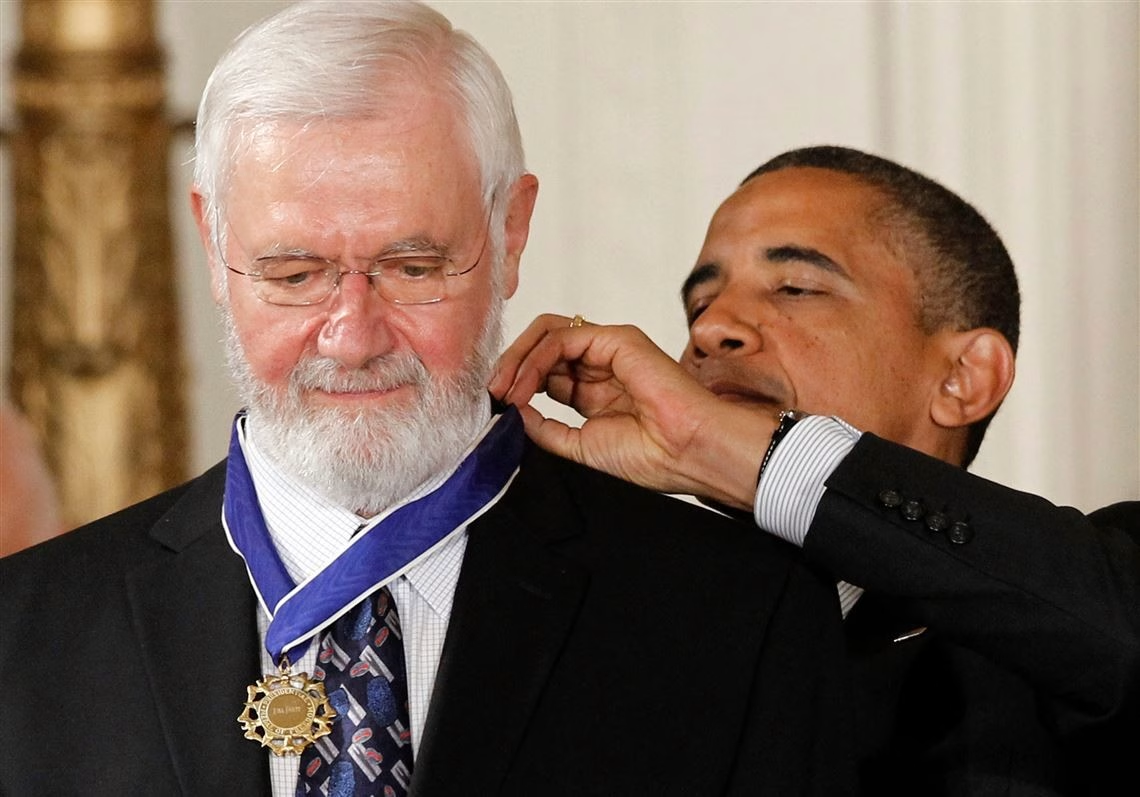
William Foege’s work has been recognized nationally and internationally, culminating in the issuance of the Presidential Medal of Freedom in 2012. This accolade stands as a testament to his unparalleled contributions to public health, particularly his successful role in the eradication of smallpox. Such recognitions highlight not only Foege’s individual achievements but also the impact of strategic public health campaigns that save millions of lives, underscoring the importance of continued investment and interest in global health.
Awards and honors aside, Foege’s true legacy lies in the lives he transformed through his tireless work. His strategies and methods continue to serve as a blueprint for public health professionals striving to eradicate diseases and improve health systems worldwide. As more health crises arise due to changing conditions, the echoes of Foege’s contributions remind us of the power of innovation, compassion, and collaboration in overcoming public health challenges.
Collaborative Spirit: Foege’s Model for Teamwork in Public Health
William Foege’s career exemplifies the spirit of collaboration that is essential for effective public health strategies. His efforts, notably during the smallpox eradication campaign, relied heavily on teamwork and cooperation among diverse groups, including local communities, governments, and international organizations. This collaborative approach fostered a sense of shared responsibility and helped galvanize resources and expertise for the common cause of health improvement.
Foege’s advocacy for cross-disciplinary collaboration set a standard for public health initiatives. He believed that solving complex health problems requires input and cooperation from various sectors including epidemiology, community health, policy-making, and grassroots mobilization. Foege’s insights into collaborative problem-solving remain relevant today as public health faces increasingly intricate challenges, underscoring the importance of collective effort in achieving public health goals.
The Future of Public Health: Lessons from William Foege’s Vision
As public health continues to evolve, the lessons learned from William Foege’s work offer valuable guidance for future strategies. His emphasis on adaptability and innovation in health policies encourages current and upcoming professionals to approach disease prevention with fresh perspectives. Foege’s successful containment methods, grounded in local community engagement, highlight the need for strategies that are both flexible and culturally sensitive, which are essential in today’s diverse global landscape.
Looking forward, Foege’s vision acts as a roadmap for confronting emerging public health threats. His belief in the coordinated action of dedicated individuals serves as an impetus for collective efforts that can bring about significant changes. As new health challenges arise, the ideals that Foege passionately rendered into practice will continue to inspire future public health leaders on their quest for a healthier, more equitable world.
Frequently Asked Questions
What is the legacy of William Foege in public health?
William Foege is renowned for his pivotal role in the eradication of smallpox, a landmark achievement in public health that serves as a testament to strategic ingenuity and global cooperation. His legacy extends beyond smallpox to include mentorship of public health professionals and the co-founding of the Task Force for Global Health, which continues to impact global health initiatives today.
How did William Foege contribute to the eradication of smallpox?
As a smallpox eradication leader, William Foege developed the innovative ring vaccination strategy, which effectively contained outbreaks by vaccinating only those at risk instead of whole populations. This method played a crucial role in the global eradication of smallpox, declared in 1980, fundamentally changing public health strategies worldwide.
What role did William Foege play as a CDC director?
William Foege served as a director of the CDC from 1977 to 1983, where he led transformative initiatives, including the smallpox eradication program and responses to emerging health crises like HIV/AIDS. His leadership solidified the CDC’s position as a critical player in global public health.
What organization did William Foege co-found to improve global health?
William Foege co-founded the Task Force for Global Health, an organization dedicated to addressing childhood immunization rates and other public health challenges worldwide. His efforts helped vaccinate 80% of the world’s children against preventable diseases by 1990.
What recognition did William Foege receive for his public health contributions?
For his exceptional contributions to public health, including leading the smallpox eradication effort, William Foege received numerous accolades, including the Presidential Medal of Freedom in 2012, the nation’s highest civilian award.
How did William Foege influence future generations of public health professionals?
William Foege’s mentorship and visionary leadership inspired generations of public health professionals, emphasizing the moral obligation to protect vulnerable populations. Many in the field credit him for igniting their passion for public health and guiding their career paths.
What was William Foege’s approach during disease outbreaks?
William Foege advocated for a surveillance-containment strategy during disease outbreaks, which focused on identifying and targeting vaccinations to specific areas rather than mass vaccination. This innovative approach proved vital in effectively containing smallpox and has influenced subsequent public health strategies.
How did Foege’s background impact his public health strategies?
With a background in medicine and epidemiology, William Foege’s approach combined scientific rigor with innovative thinking and community engagement. His experiences during his early career in Nigeria significantly shaped his strategies for outbreak management and disease eradication.
| Key Aspect | Details |
|---|---|
| William Foege’s Background | Former CDC director, public health pioneer, led smallpox eradication efforts. |
| Tenure at CDC | Served from 1977 to 1983 and directed the Smallpox Eradication Program. |
| Smallpox Efforts | Developed the ring vaccination strategy, which was pivotal in eradicating smallpox. |
| Guinea Worm Disease | Led efforts at the Carter Center to nearly eliminate this disease. |
| Legacy | Inspiration and mentorship to many public health professionals worldwide. |
Summary
William Foege is remembered as a transformative figure in public health, whose innovative approaches led to the successful eradication of smallpox and notable efforts against diseases like Guinea worm disease. His legacy is not only marked by scientific achievements but also by his profound impact on future generations of health leaders, inspiring a continued commitment to improving health outcomes for vulnerable populations worldwide.
The content provided on this blog (e.g., symptom descriptions, health tips, or general advice) is for informational purposes only and is not a substitute for professional medical advice, diagnosis, or treatment. Always seek the guidance of your physician or other qualified healthcare provider with any questions you may have regarding a medical condition. Never disregard professional medical advice or delay seeking it because of something you have read on this website. If you believe you may have a medical emergency, call your doctor or emergency services immediately. Reliance on any information provided by this blog is solely at your own risk.