

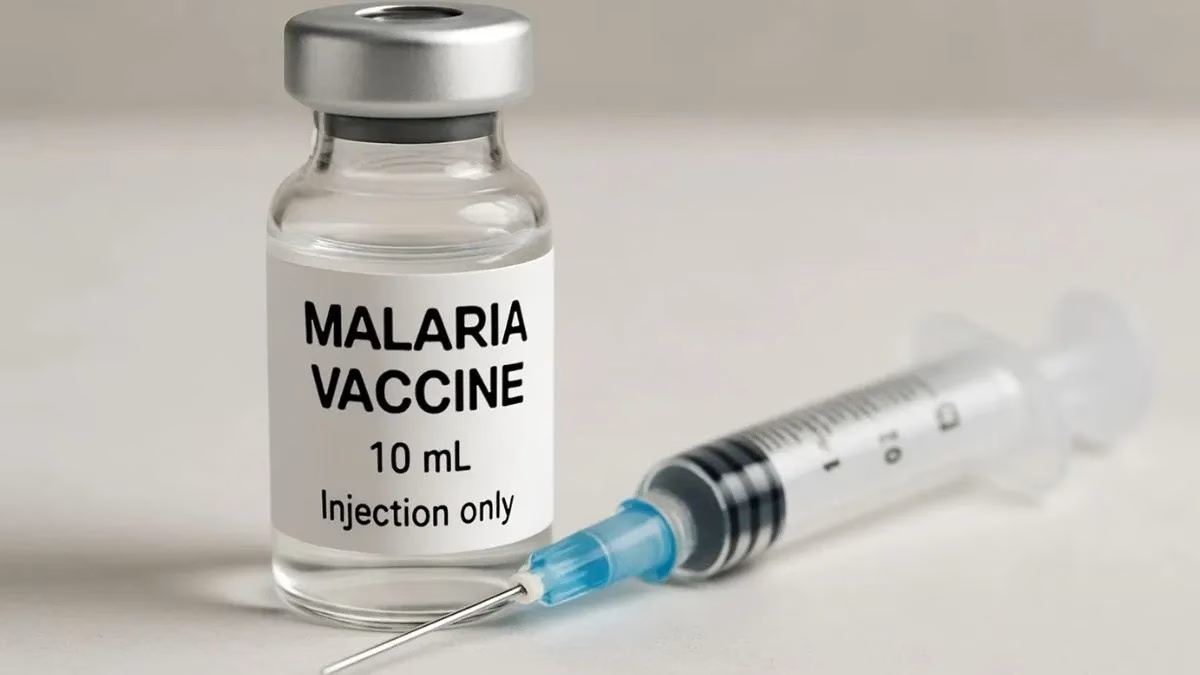
The **multistage malaria vaccine** has demonstrated remarkable potential in recent trials, paving the way for significant advancements in malaria prevention. In a groundbreaking study published in *The Lancet Infectious Diseases*, researchers noted that the investigational ProC6C-AlOH vaccine achieved notable efficacy in protecting against controlled human malaria infections involving *Plasmodium falciparum*, the parasite responsible for severe malaria. Conducted in Mali, this malaria vaccine trial involved adult participants who are often exposed to the malaria parasite, ensuring relevant outcomes for endemic regions. The findings, which highlight the vaccine’s success in delaying parasitemia, underscore its promise in malaria protection studies. As the search continues for effective malaria vaccines, the efficacy of this innovative multistage approach may hold the key to more effective interventions against a disease that affects millions worldwide.
The introduction of a **multistage malaria vaccine** signifies an exciting milestone in the fight against malaria, particularly against the notorious species *Plasmodium falciparum*. This innovative approach targets several stages of the parasite’s life cycle, offering a comprehensive method of disease prevention. Recent research, particularly the malaria protection study featuring the ProC6C-AlOH vaccine, showcases promising outcomes in terms of vaccine efficacy and the potential to significantly lower infection rates. By actively engaging with the complexities of the malaria life cycle, this vaccine aims to enhance global health efforts and ultimately improve outcomes in malaria-endemic regions. As trials evolve, the scientific community remains hopeful for advancements that will extend the benefits of this formulation to larger populations.
Understanding the Multistage Malaria Vaccine
The multistage malaria vaccine represents a groundbreaking advancement in the fight against malaria, specifically targeting the deadly *Plasmodium falciparum* parasite. This innovative vaccine, known as ProC6C-AlOH/Matrix-M, operates by disrupting multiple stages of the parasite’s lifecycle, thereby providing comprehensive protection. The vaccine aims not only to prevent infection but also to mitigate the severity of malaria symptoms if infection occurs. This approach is vital considering the complexity of the *Plasmodium falciparum* lifecycle and its ability to evade immune responses.
Recent trials have shown that the efficacy of the malaria vaccine significantly surpasses previous models, making it a promising candidate for widespread use. In particular, the study published in *The Lancet Infectious Diseases* found that the vaccine offered a remarkable protection rate among a cohort of Mali adults, who are frequently exposed to malaria. The innovative design of the ProC6C-AlOH vaccine allows it to function effectively even in regions with high malaria transmission, where traditional single-stage vaccines have previously failed to provide adequate protection.
The Importance of Malaria Vaccine Trials
Malaria vaccine trials, such as the study assessing ProC6C-AlOH/Matrix-M, are crucial for validating the effectiveness of new vaccines. These trials help determine not just the efficacy of the vaccine, but also the safety profile and potential side effects that may arise during normal immune responses. In the latest study, control groups administered rabies vaccines highlighted important metrics for safety and comparison, underscoring the rigorous testing protocols that govern malaria vaccine trials.
Moreover, such studies provide invaluable data that can inform future iterations of malaria vaccine designs. By understanding the correlates of protection, like the 54% efficacy rate demonstrated in the recent trial, researchers can refine vaccines to enhance their protective capabilities further. Analyzing the outcomes of these malaria vaccine trials is essential for addressing public health challenges posed by malaria, particularly in endemic regions.
Efficacy Indicators of the Latest Malaria Vaccine
The efficacy of a malaria vaccine is a critical measurement that dictates its potential for deployment on a broader scale. The recent findings regarding the ProC6C-AlOH malaria vaccine indicate a robust efficacy rate of 54%, which is noteworthy as it is the first anti-*P. falciparum* subunit vaccine to achieve such results against controlled human malaria infection (CHMI). This elevated efficacy suggests that the vaccine could offer a higher level of prevention compared to previous iterations that targeted single stages of the parasite.
Moreover, the ability of the vaccine to delay the onset of detectable parasitemia in recipients showcases its effectiveness even post-infection, with a reported improvement of 76% efficacy among those who became infected. Such data not only strengthens the case for advancing the ProC6C-AlOH vaccine but also encourages the malaria research community to continue exploring multistage strategies for malaria protection. The results underscore the importance of developing vaccines that can address various stages of *Plasmodium falciparum*, ultimately leading to more comprehensive malaria control.
Initial Reactions to Vaccine Safety and Efficacy
Initial reactions from researchers and participants regarding the safety profile of the multistage malaria vaccine have been largely positive, despite some increased reports of mild adverse events. The safety monitoring during vaccine trials is stringent, aiming to ensure that any potential side effects are well documented and assessed. The acknowledgment that the adverse events reported were primarily mild suggests that the ProC6C-AlOH vaccine is well-tolerated, which is a crucial factor for its future adoption in broader vaccination programs.
Furthermore, the continuous monitoring and evaluation will play a pivotal role in shaping public perception and acceptance of the vaccine. Gaining trust from communities in malaria-endemic regions is pertinent, as widespread vaccine uptake relies on the assurance of safety and efficacy. Researchers emphasize that the progress made in the current malaria vaccine trial is a step towards more reliable and protective solutions against malaria, building a foundation for future studies and continuous improvements.
Next Steps for Malaria Vaccine Research
As researchers celebrate the promising outcomes of the ProC6C-AlOH malaria vaccine trial, there is also a collective forward-looking anticipation for next steps in malaria vaccine research. Future studies are expected to focus on evaluating the vaccine’s efficacy in real-world settings where naturally acquired malaria remains a persistent threat. This involves testing the vaccine on younger populations, including children, who are often more vulnerable to severe forms of malaria.
These subsequent studies will not only gauge the real-world effectiveness of the multistage malaria vaccine but also further elucidate the vaccine’s mechanisms of action within diverse population demographics. As researchers push toward understanding the breadth and depth of malaria vaccine efficacy, their focus will likely include comparative studies with other malaria vaccines to solidify the ProC6C-AlOH vaccine’s place as a potential cornerstone in malaria prevention strategies.
Prospects for Global Malaria Elimination
The emergence of the multistage malaria vaccine, particularly the ProC6C-AlOH, brings renewed hope for global malaria elimination efforts. With malaria continuing to pose a significant public health challenge, innovations in malaria vaccination are crucial in achieving the World Health Organization’s global targets. The increasing global attention on malaria vaccine development reflects a commitment to eradicating this preventable disease that affects millions.
Moreover, partnerships among researchers, government bodies, and international health organizations will be vital in accelerating the pathway for the multistage malaria vaccine from trial to implementation. This collaborative approach is essential to address logistical challenges, such as distribution and access to populations most at risk. As successful deployment of such a vaccine unfolds, it promises to play a pivotal role in reducing malaria transmission rates and ultimately mitigating the burden of malaria worldwide.
Addressing Malaria Vaccine Challenges
Despite the promising results of the ProC6C-AlOH malaria vaccine, challenges remain that researchers and public health officials must address. One of the primary hurdles is ensuring equitable access to the vaccine in high-burden malaria areas, particularly in remote regions where healthcare infrastructure may be lacking. Addressing these disparities is crucial for the success of any malaria vaccination program.
In addition, researchers must continue to assess the long-term efficacy and durability of the immune response elicited by the multistage malaria vaccine. Continuous monitoring and evaluation will be necessary to determine whether booster doses might be required to maintain immunity over time. Such studies will inform best practices and guidelines for the implementation of the vaccine in different populations, ensuring that malaria protection can be sustained over generations.
Significance of Integrating Multistage Approaches
Integrating multistage approaches in malaria vaccine development has been highlighted as a game-changer in combating the disease. Focusing on various stages of the *Plasmodium falciparum* lifecycle allows for a more robust immune response and a higher likelihood of providing long-term protection against infections. The significance of targeting multiple stages cannot be overstated as malaria parasites have shown remarkable capability in evolving resistance toward single-component vaccines.
The multistage malaria vaccine, particularly ProC6C-AlOH, embodies this paradigm shift in vaccine strategy. By involving multiple targets, the vaccine not only enhances protective immunity but also contributes to a comprehensive approach to malaria prevention. This shift is essential in progressing toward a future where malaria is minimized and potentially eradicated, ultimately saving lives and improving health outcomes.
Future Directions in Malaria Vaccine Development
As the malaria vaccine landscape continues to evolve, future directions in research and development will likely revolve around refining existing vaccines and exploring new candidates. Studies investigating the ProC6C-AlOH vaccine’s performance in diverse populations and under varying malaria transmission settings are paramount. These future studies will contribute significantly to understanding vaccine durability, immunogenicity, and the need for booster shots.
In addition, collaborative efforts between academia and industry are critical for accelerating the pipeline of malaria vaccines, ensuring that promising candidates swiftly transition from the laboratory to the field. Enhancing vaccine delivery systems and integrating malaria vaccines into national immunization programs will be pivotal in achieving equitable distribution and maximizing public health benefits. Ultimately, sustained investment and commitment to malaria vaccine development can lead to revolutionary changes in global health and the potential eradication of malaria.
Frequently Asked Questions
What is the ProC6C-AlOH malaria vaccine and how does it relate to multistage malaria vaccine development?
The ProC6C-AlOH vaccine is an investigational multistage malaria vaccine designed to target various stages of the *Plasmodium falciparum* life cycle. It represents a significant advancement in malaria vaccine trials by providing a promising efficacy level against controlled human malaria infection (CHMI) as demonstrated in recent studies.
What were the results of the malaria vaccine trial for the multistage malaria vaccine?
The malaria vaccine trial for the multistage ProC6C-AlOH vaccine showed a 54% efficacy rate in preventing parasitemia after participants were intentionally exposed to malaria. Additionally, the vaccine delayed the onset of detectable parasites in those infected, demonstrating a 76% efficacy in that context.
How does the efficacy of the multistage malaria vaccine compare to previous malaria vaccine trials?
The multistage malaria vaccine, ProC6C-AlOH, is the first anti-*P. falciparum* subunit vaccine to exceed 50% efficacy in CHMI trials at 12 weeks post-vaccination, marking a notable improvement compared to earlier malaria vaccine trials.
What does the term ‘controlled human malaria infection’ (CHMI) mean in the context of the multistage malaria vaccine?
Controlled human malaria infection (CHMI) involves intentionally exposing vaccinated participants to malaria to evaluate the vaccine’s protective efficacy. This method provides critical data on the vaccine’s effectiveness against *Plasmodium falciparum*, the causative agent of severe malaria.
What are the implications of the multistage malaria vaccine findings for future malaria protection studies?
The findings from the ProC6C-AlOH vaccine trials suggest promising avenues for future malaria protection studies. Researchers plan to evaluate its efficacy against naturally acquired malaria and its effectiveness in younger populations where malaria is prevalent.
What role do adverse events play in the assessment of the multistage malaria vaccine?
Adverse events in the malaria vaccine trial for the ProC6C-AlOH vaccine were generally mild and more frequent than in the control group. Understanding these events is crucial for assessing the overall safety and tolerability of the multistage malaria vaccine.
Why is it important to develop a multistage malaria vaccine like ProC6C-AlOH?
Developing a multistage malaria vaccine like ProC6C-AlOH is important because it targets multiple stages of the *Plasmodium falciparum* lifecycle, which may enhance protection against malaria. This aligns with the malaria community’s consensus on the need for comprehensive coverage to combat the disease effectively.
How will the results of the multistage malaria vaccine trial inform future malaria vaccination strategies?
The results of the ProC6C-AlOH malaria vaccine trial will inform future vaccination strategies by providing insights into optimal dosing regimens and efficacy against both controlled and naturally acquired malaria, guiding the development of more effective malaria vaccines.
| Key Points |
|---|
| A new experimental multistage malaria vaccine shows promising protection against malaria in a small clinical trial. |
| The vaccine, ProC6C-AlOH/Matrix-M, was tested on adults in Mali where malaria is common. |
| 34 participants were enrolled, receiving either the malaria vaccine or a control rabies vaccine. |
| 54% efficacy was observed, with vaccination delaying infection onset by 2 days for those who became infected. |
| The study marks the first subunit malaria vaccine exceeding 50% efficacy against controlled malaria infection. |
| Further research is needed, particularly for young children and in natural malaria infections. |
Summary
The multistage malaria vaccine is a promising development in the fight against malaria, showcasing its potential efficacy in providing protection against malaria infection. With the vaccine showing significant results in a recent clinical trial, it is crucial to continue exploring its effectiveness and application in broader populations.
The content provided on this blog (e.g., symptom descriptions, health tips, or general advice) is for informational purposes only and is not a substitute for professional medical advice, diagnosis, or treatment. Always seek the guidance of your physician or other qualified healthcare provider with any questions you may have regarding a medical condition. Never disregard professional medical advice or delay seeking it because of something you have read on this website. If you believe you may have a medical emergency, call your doctor or emergency services immediately. Reliance on any information provided by this blog is solely at your own risk.