

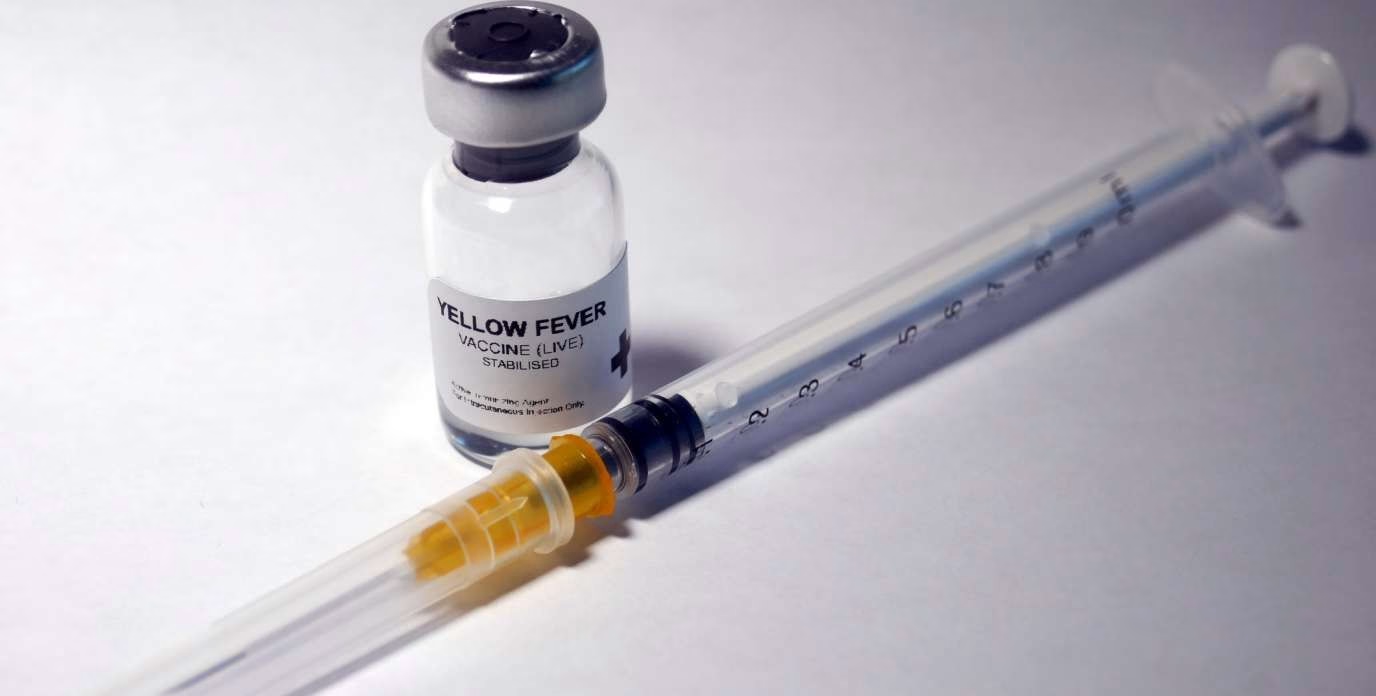
The emergence of the lower-dose yellow fever vaccine has sparked significant interest among public health officials and researchers alike, as it could potentially address vaccine shortages during outbreaks. Recent studies have revealed that while a lower dose may be effective in adults, its efficacy in infants remains uncertain, raising questions about yellow fever vaccine effectiveness in different demographics. Infants receiving the lower dose demonstrated a lower yellow fever antibody response compared to those who received the standard dosage, prompting a reevaluation of infant vaccination guidelines. Health authorities must carefully consider vaccine dosage comparisons to ensure optimal protection for vulnerable populations, especially in light of recent yellow fever outbreak responses. As the search for effective vaccination strategies continues, the implications of these findings on public health policy could be profound.
Researchers are increasingly examining the impact of fractional dosing of the yellow fever vaccine, particularly in the context of pediatric health. This talk revolves around the possibility that a reduced vaccine dosage might suffice during critical vaccine shortages, yet the data suggest potential drawbacks when it comes to antibody levels in young children. The nuanced conversation regarding vaccination strategies includes discussions on the implications of yellow fever vaccine dosage differences and how they relate to the immune response in infants. The international health community continues to monitor these developments, seeking the best course of action to enhance both individual protection and broader public health outcomes against yellow fever outbreaks. In essence, ensuring that infants receive adequate protection remains a focal point for healthcare strategies, with ongoing research guiding future directives.
Understanding the Efficacy of Lower-Dose Yellow Fever Vaccine in Infants
Recent research has demonstrated that administering a lower-dose yellow fever vaccine to infants aged 9 to 12 months yields significantly poorer antibody responses compared to the standard dose. In a clinical trial involving 420 infants, seroconversion rates were 99% for those receiving the full dosage of over 13,000 IU, while those given the 500 IU lower-dose only achieved a rate of 93%. This finding raises critical questions about the efficacy of lower doses in pediatric populations, particularly considering that immunity in infants is paramount for protecting against outbreaks of this mosquito-borne disease.
The study highlights a key challenge in vaccine dosage, suggesting that extrapolating data from adult populations to infants can be misleading. The World Health Organization (WHO) has endorsed the use of fractional doses for adults during vaccine shortages, but the current findings indicate that similar strategies may not safely apply to children. Sufficient protection against yellow fever hinges on the right antibody levels, and lower antibody development could lead to waning immunity, potentially compromising infant health during outbreaks.
Comparative Analysis of Yellow Fever Vaccine Dosages
Vaccine dosage comparison is a crucial aspect of public health strategy, especially regarding diseases like yellow fever. The recent study underscores that the recommended dosage for adults, which was found to be effective at a lower threshold, does not equivalently translate to infants. Despite the WHO’s endorsement of using lower doses in adults to alleviate supply issues during emergencies, this approach might not be recommended for younger populations who may require standard doses for adequate immunological response.
With concerns about vaccine shortages, it’s essential to revisit infant vaccination guidelines, particularly how they relate to yellow fever vaccine effectiveness. The data reflects a potential risk where lower-dose vaccinations could leave a gap in immunity for infants, demonstrating that a robust antibody response is necessary for long-term protection. Public health initiatives must prioritize clarity in these guidelines to ensure both the safety and effectiveness of vaccination efforts across all age groups.
Implications of Yellow Fever Antibody Response Variability
The variability in yellow fever antibody responses based on vaccine dosage presents significant implications for public health strategies, particularly in regions where the disease is endemic. The recent findings indicate that infants receiving a lower-dose of the vaccine had lower antibody levels which could correlate with a higher probability of infection in the event of an outbreak. This situation emphasizes the need for continuous monitoring and analysis of vaccine responses across demographics to better understand their efficacy.
Furthermore, the uncertain correlation between antibody levels and actual protection against yellow fever highlights the complex nature of immunological responses. As researchers continue to investigate the implications of lower-dose vaccination on protective immunity, health organizations must be proactive in adjusting vaccination strategies to optimize outcomes, especially for vulnerable populations such as infants. Building a robust vaccination program requires understanding these dynamics to ensure an effective response during yellow fever outbreaks.
Response to Yellow Fever Outbreaks and Vaccination Strategies
Effective yellow fever outbreak response necessitates a nuanced understanding of vaccination strategies, particularly the timing and choice of vaccine dosages. Public health officials often face dilemmas when confronting rapid disease spread, especially when traditional vaccine supplies are scarce. The recent study’s findings highlight that while lower doses may mitigate supply constraints for adults during outbreaks, such an approach might not suffice for infants who are at increased risk of severe disease.
As we strive for a comprehensive approach to managing yellow fever outbreaks, it is imperative to establish flexible vaccination strategies that consider age-specific embodiments of immunity. Implementing sound monitoring practices and adapting dosage recommendations based on trial data will significantly improve response efforts in affected areas. Ultimately, timely and effective vaccination is critical in preventing the resurgence of yellow fever, thus safeguarding public health.
Recommendations for Infant Vaccination Guidelines
The current research calls for a reevaluation of infant vaccination guidelines against yellow fever. The findings from the study indicated that standard doses should be prioritized in the WHO Expanded Programme on Immunization, particularly for infants who generally face higher health risks from infectious diseases. Without assurance of effective antibody responses, vaccinating using lower doses may expose infants to higher incidents of infection.
Revising vaccination protocols to align with evidence-based recommendations ensures that infants receive adequate protection against yellow fever. As public health officials develop strategies for disease control, these updated infant vaccination guidelines must adapt to emerging research and data while ensuring that vaccination plans effectively address regional epidemiology of yellow fever.
Understanding the Risks of Lower Antibody Levels in Infants
Understanding the risks associated with lower antibody levels in infants receiving the yellow fever vaccine is critical for public health. The study revealed that lower-dose recipients showed a decreased antibody response, potentially leading to inadequate immunity against the disease. This scenario poses a heightened risk of infections, particularly during outbreak conditions where exposure levels increase.
The ramifications of insufficient immunological protection highlight the need for systematic studies on antibody response among different populations. Tracking the longevity of immunity and understanding how these lower levels correlate with disease susceptibility can inform future vaccine administration strategies, ensuring that vulnerable groups like infants are not left at risk.
Long-Term Impacts of Yellow Fever Immunization Policies
In light of the recent study, the long-term impacts of yellow fever immunization policies warrant critical examination. As health experts navigate the balance between sufficient vaccine supply and effective immunization, understanding the implications of shifting dosage recommendations will significantly influence public health outcomes. Evidence indicates that maintaining standard vaccination practices is essential for sustaining herd immunity in communities.
Engaging stakeholders in the healthcare sector – from public health agencies to local healthcare providers – is necessary for reinforcing these policies. Commitment to research and ongoing evaluation can provide insights into how dosage adjustments impact the broader population’s health, helping to shape resilient immunization strategies during potential yellow fever outbreaks.
Vaccination and Human Health During Yellow Fever Epidemics
Vaccination remains the cornerstone of human health and disease prevention during yellow fever epidemics. The emergence of recent data emphasizing the effectiveness of the standard yellow fever vaccine dosage propels health agencies to reassess their response strategies. Ensuring that optimal vaccination practices are adhered to can significantly curtail the spread of the disease.
In summary, public health initiatives must prioritize vaccination as an essential defense strategy against yellow fever. Effective communication regarding vaccination techniques and the importance of adhering to recommended dosage standards, particularly for infants, must be at the forefront of epidemic response efforts.
Clinical Trials and Their Influence on Public Health Recommendations
Clinical trials play a pivotal role in shaping public health recommendations, as seen in the recent research on yellow fever vaccination. Trials conducted on varying populations, such as infants, provide valuable data that influence guidelines on vaccine dosages and administration protocols. The insights gained from these studies underline the necessity for a robust evidence base to guide health policies and immunization strategies.
Through clinical trials, the medical community is better equipped to understand the nuances related to yellow fever vaccine effectiveness. Ongoing exploration of vaccine responses enables authorities to refine policies, ensuring that all population segments, especially vulnerable groups, are adequately protected in the face of emerging infectious diseases.
Frequently Asked Questions
What is the effectiveness of the lower-dose yellow fever vaccine in infants compared to the standard dose?
Recent studies indicate that the lower-dose yellow fever vaccine (500 IU) triggers a poorer antibody response in infants than the standard dose, which offers greater immunity. For infants aged 9 to 12 months, the seroconversion rate was 93% for the lower dose compared to 99% for the standard dose, suggesting that infants may require the standard dose to achieve adequate protection.
What are the infant vaccination guidelines for the yellow fever vaccine?
Vaccination guidelines for yellow fever recommend using the standard dose of the yellow fever vaccine for infants, particularly as research shows that lower doses may not provide sufficient immunogenicity. The World Health Organization emphasizes that the full standard dose should be employed in routine childhood immunization to ensure optimal immunity against yellow fever.
How does the yellow fever antibody response differ between lower and standard doses in infants?
The yellow fever antibody response is significantly lower in infants who receive the lower-dose yellow fever vaccine (500 IU) compared to those who receive the standard dose. A study revealed that while the standard dose achieved a 99% seroconversion rate, the lower dose resulted in only a 93% rate, indicating a higher likelihood of inadequate immune protection in infants receiving the lower dosage.
What was the purpose of comparing vaccine dosages in the recent yellow fever vaccine study?
The purpose of comparing vaccine dosages in the study was to assess the non-inferiority of a lower-dose yellow fever vaccine (500 IU) against the standard dose (over 13,000 IU) among infants. With yellow fever vaccine production limited, understanding the efficacy of lower doses in young children is crucial for effective outbreak response, while ensuring that optimal immune protection is maintained.
What implications do lower antibody levels from the yellow fever vaccine have for infant protection?
Lower antibody levels from the lower-dose yellow fever vaccine may result in waning immune responses that do not provide adequate long-term protection against yellow fever. As observed in animal studies, this could mean infants are at increased risk of severe disease if they do not generate sufficient neutralizing antibodies after vaccination.
| Key Points |
|---|
| A study in Kenya and Uganda found that infants receiving a lower dose of yellow fever vaccine have lower antibody levels compared to those receiving the standard dose. |
| The trial involved 420 infants aged 9 to 12 months who received either the standard dose (over 13,000 IU) or 500 IU of the yellow fever vaccine. |
| At 28 days post-vaccination, the seroconversion rate was 99% for the standard dose and 93% for the 500 IU dose, failing the non-inferiority threshold. |
| Lower antibody levels could mean less protection against yellow fever, as lower antibody counts may reduce the chances of having detectable neutralizing antibodies. |
| The researchers concluded that standard doses should be used for infants as part of the WHO Expanded Programme on Immunization. |
Summary
Lower-dose yellow fever vaccine trials have highlighted significant concerns regarding its efficacy in infants. The study indicates that infants receiving a lower dosage exhibited poorer antibody responses compared to those vaccinated with the standard dose. This research prompts a reevaluation of the minimum effective dosage for children, underscoring the importance of adhering to standard vaccine protocols to ensure sufficient protection against yellow fever.
The content provided on this blog (e.g., symptom descriptions, health tips, or general advice) is for informational purposes only and is not a substitute for professional medical advice, diagnosis, or treatment. Always seek the guidance of your physician or other qualified healthcare provider with any questions you may have regarding a medical condition. Never disregard professional medical advice or delay seeking it because of something you have read on this website. If you believe you may have a medical emergency, call your doctor or emergency services immediately. Reliance on any information provided by this blog is solely at your own risk.