


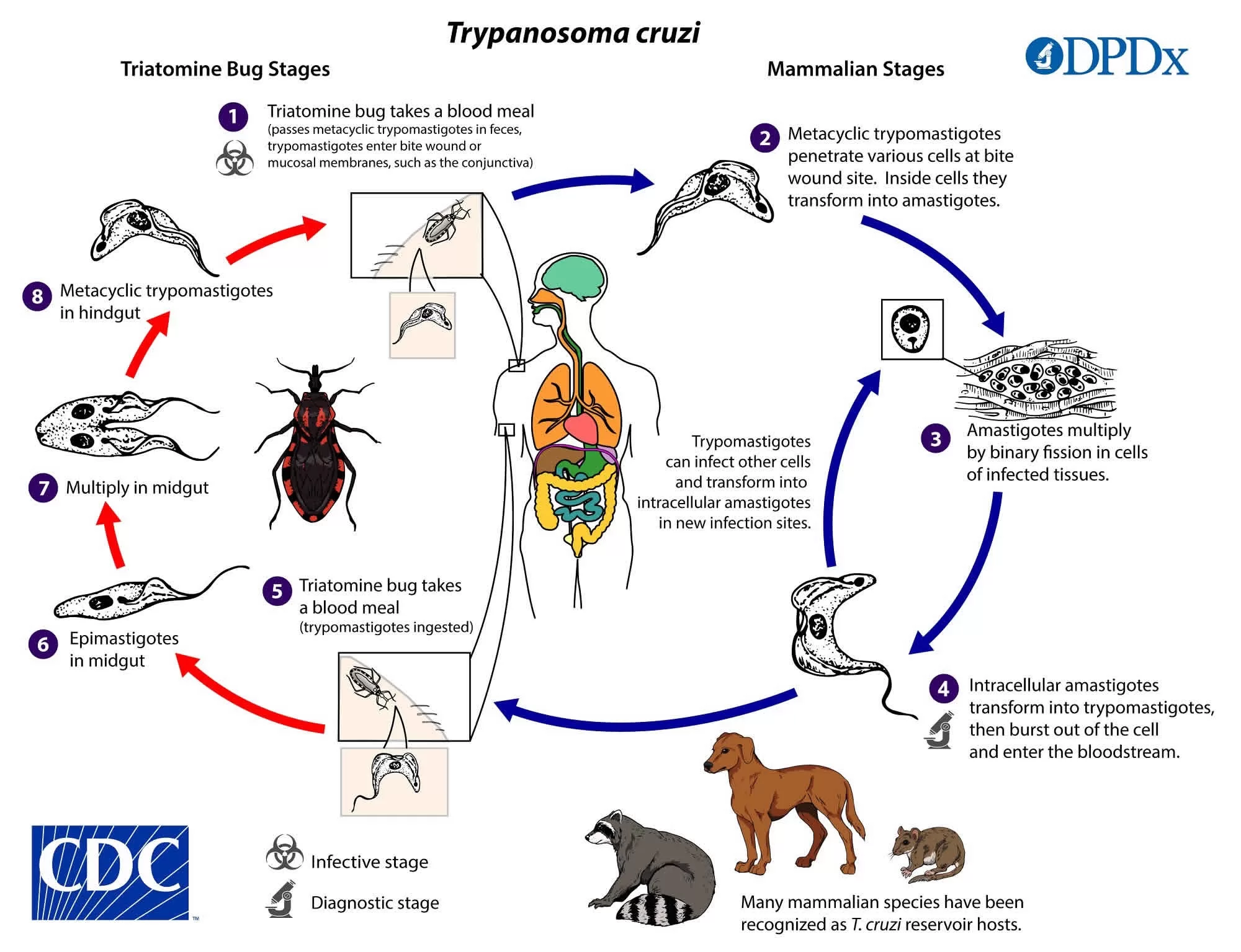
Chagas disease, a neglected tropical disease caused by the protozoan parasite Trypanosoma cruzi, poses a growing health concern, even in regions historically considered nonendemic like the United States. Despite most cases occurring in 21 countries across the Americas, alarming evidence suggests that triatomine insects, the primary vectors of T. cruzi, are prevalent in many southern states. This evolving landscape calls for increased Chagas disease awareness, particularly as autochthonous cases have been documented in places like Texas. Furthermore, the prevalence of Chagas disease in domestic and wildlife reservoirs amplifies the risk of transmission to humans. Understanding the dynamics of this disease and its impact on public health is crucial, as it highlights the importance of effective surveillance and healthcare systems to combat this persistent issue.
Often referred to as American trypanosomiasis, Chagas disease is emblematic of the complex interactions between humans and nature when it comes to emerging health threats. The Triatomine bugs, commonly known as kissing bugs, play a pivotal role in the transmission of the Chagas disease-causing parasite, Trypanosoma cruzi, making their management essential for public health safety. As awareness about this disease grows, so does the recognition that its effects extend beyond endemic borders, with increasing reports of infection cases in areas like the southern United States. Calls for improved disease awareness and services are critical to addressing the long-standing misdiagnosis and underreporting surrounding Chagas disease prevalence. Ultimately, tackling the impact of American trypanosomiasis requires not only local but also overarching health initiatives to ensure that the health risks are adequately managed.
Understanding Chagas Disease: A Growing Health Concern in the US
Chagas disease, caused by the parasite Trypanosoma cruzi, has historically been viewed as a tropical ailment primarily affecting regions in Latin America. However, emerging evidence indicates that this parasitic infection is not confined to these areas. In the United States, particularly in the southern states, several species of triatomine insects—known vectors for T. cruzi—are prevalent, leading to increasing interactions with human populations. The presence of these vectors in domestic settings raises alarms about the potential for local transmission and infection.
Recent evaluations show that among wildlife and domestic animals, the prevalence of T. cruzi can be alarmingly high. Much of the wildlife, such as raccoons and opossums, can harbor the parasites and contribute to the ecological cycle of Chagas disease in the US. Furthermore, confirmed human cases, particularly in states like Texas, highlight the necessity of recognizing Chagas disease as more than just a foreign health issue. Addressing this growing concern is critical for public health policymakers, who must strategize the inclusion of Chagas disease in epidemiological studies and health surveillance in the United States.
The Role of Triatomine Insects in Chagas Disease Transmission
Triatomine insects, commonly referred to as kissing bugs, play a fundamental role in the transmission of Chagas disease. These blood-feeding pests are found in various habitats, notably in the southern United States, where their populations are thriving. Their ability to adapt to domestic environments facilitates direct interaction with humans, increasing the risk of T. cruzi transmission. As these insects invade human dwellings, they bring with them the potential for infection, thereby fueling the underreported cases of Chagas disease.
The ecological interaction between triatomine insects and their hosts emphasizes the need for public awareness campaigns showcasing the risks associated with these vectors. Understanding the behaviors of these insects, including their habitats and feeding patterns, is crucial for effective prevention strategies. Moreover, heightened surveillance and targeted educational efforts can aid in reducing the risk associated with triatomine bites and subsequent T. cruzi infections, ultimately leading to a decrease in Chagas disease prevalence within affected communities.
Chagas Disease Prevalence in Domestic and Wild Animal Reservoirs
Chagas disease prevalence extends beyond humans to various domestic and wild animals that serve as reservoirs for the Trypanosoma cruzi parasite. In the United States, companion animals, particularly dogs, are frequently infected and contribute significantly to the epidemiological landscape of the disease. This zoonotic aspect makes it imperative to assess the health of animal populations regularly, as they can serve as indicators of the threat level posed by Chagas disease to humans.
Furthermore, wildlife plays a substantial role in maintaining the parasite within ecosystems. With numerous wildlife species capable of harboring T. cruzi, understanding the dynamics of infection in environments where humans and animals coexist becomes integral. This interconnection underscores the need for comprehensive health monitoring systems that not only evaluate human cases but also consider the health status of animal populations, thus helping to mitigate the risks of zoonotic transmission of Chagas disease.
The Importance of Chagas Disease Awareness and Education
Despite the concerning evidence of Chagas disease in the U.S., there remains a significant lack of awareness among the general public and healthcare professionals alike. This ignorance contributes to underreporting and misdiagnosis of the disease, leaving many affected individuals without necessary treatment or care. By enhancing Chagas disease awareness through educational campaigns and community outreach, healthcare providers can better identify and manage cases, ensuring that patients receive timely diagnosis and treatment.
Effective educational efforts should target at-risk populations, particularly in areas where triatomine insects are prevalent. Campaigns can inform communities about preventive measures, such as reducing habitat suitability for kissing bugs and recognizing symptoms associated with Chagas disease. Increasing awareness not only promotes individual health but also fosters a collective responsibility for public health initiatives aimed at combating this neglected tropical disease.
Public Health Policies for Addressing Chagas Disease
To effectively address the challenges posed by Chagas disease in the United States, public health policies must evolve to reflect the true epidemiological reality of the disease. Classification of Chagas disease as endemic, rather than simply hypoendemic, will influence funding for research, surveillance, and education efforts. Policymakers need to acknowledge the disparity between the current healthcare infrastructure and the rising threat of this neglected health issue, advocating for comprehensive strategies that integrate Chagas disease management into broader public health agendas.
Additionally, collaboration among public health agencies, researchers, and community organizations is crucial to develop cohesive response strategies. By implementing policies that emphasize education, surveillance, and disease prevention, the U.S. can make significant strides towards reducing transmission rates and improving health outcomes for affected individuals. Ultimately, proactive engagement is essential for effectively managing the epidemiological patterns of Chagas disease.
Epidemiological Strategies for Chagas Disease Surveillance
A robust epidemiological framework is vital for understanding and controlling the spread of Chagas disease within the United States. Enhanced surveillance systems that monitor both human and animal populations can provide valuable data regarding infection rates and disease transmission dynamics. By leveraging this data, public health officials can identify at-risk communities and tailor interventions to address specific educational and healthcare needs, thus mitigating the impact of T. cruzi transmission.
Furthermore, it is important to foster collaborations between veterinary and human health sectors to monitor animal reservoirs effectively. Tracking Chagas disease prevalence in domestic animals, alongside human cases, offers insights into the ecological relationships between the host, vector, and parasite. These integrated surveillance strategies will not only help in combating Chagas disease but also enhance overall public health readiness in the face of emerging infectious diseases.
The Global Perspective on Chagas Disease: Lessons for the US
Chagas disease is a significant public health issue in many countries across Latin America, presenting important lessons for the United States. International collaborative efforts have led to improved surveillance, treatment approaches, and public education campaigns that can be adapted for the American context. By learning from these global experiences, the U.S. can develop more effective strategies to manage the impact of Chagas disease locally.
Engaging with global health initiatives that focus on neglected tropical diseases can also foster an understanding of the broader implications of Chagas disease transmission and prevention. Exchange of knowledge and practices can enhance domestic health policies and lead to innovations in public health responses. A comprehensive global perspective will ensure that strategies are not only tailored to local needs but are also informed by successful practices from other nations combatting Chagas disease.
Future Directions for Chagas Disease Research in the US
As Chagas disease continues to emerge as a health threat in the United States, future research priorities must be established to better understand its epidemiology, transmission dynamics, and potential interventions. Funding for research initiatives focused on T. cruzi biology, triatomine vector behavior, and disease impact on diverse populations will be critical for formulating effective public health strategies. The inclusion of Chagas disease research in funding programs would enhance understanding and capacity to respond to this growing health concern.
Moreover, interdisciplinary approaches that bridge public health, veterinary medicine, and ecological research will facilitate comprehensive studies into the complexities of Chagas disease transmission. By fostering collaboration among researchers from various fields, innovative solutions can be developed, creating a resilient healthcare system prepared to handle the challenges posed by Chagas disease in the future.
Community Engagement in Chagas Disease Prevention and Control
Community engagement plays a crucial role in the prevention and control of Chagas disease. Empowering local populations with knowledge about the disease, its vectors, and preventive measures is essential for reducing transmission risks. By fostering a sense of responsibility within communities, individuals can take proactive steps in reducing habitat suitability for triatomine insects and can easily identify potential Chagas disease symptoms.
Incorporating community input into public health initiatives fosters trust and promotes adherence to preventive strategies. Efforts such as local workshops, informational sessions, and collaborations with community-based organizations can enhance understanding of Chagas disease’s impact and mobilize community action. Engaged communities will be a critical factor in the sustainable management of Chagas disease, ultimately leading to better health outcomes.
Frequently Asked Questions
What is Chagas disease and how is it related to Trypanosoma cruzi?
Chagas disease is an infectious illness caused by the parasite Trypanosoma cruzi. This parasite is primarily transmitted to humans through the bites of infected triatomine insects, often referred to as ‘kissing bugs.’ Understanding the association between Chagas disease and Trypanosoma cruzi is crucial in recognizing its health implications, especially in regions where these insects are prevalent.
Is Chagas disease prevalent in the United States?
While Chagas disease is traditionally considered endemic to 21 countries in Latin America, recent studies indicate that the prevalence of Trypanosoma cruzi in the U.S. has increased. Specifically, triatomine insects, which transmit the infection, have been identified in 32 states, with notable autochthonous cases reported in Texas, challenging the stereotype of Chagas disease as nonendemic to the U.S.
How can Chagas disease awareness be improved in the U.S.?
Improving Chagas disease awareness in the U.S. requires comprehensive public health education about its transmission, symptoms, and treatment. Campaigns should focus on the risks associated with triatomine insects and the epidemiological patterns of Chagas disease, as well as the necessity of recognizing the disease as endemic in certain regions to boost surveillance and healthcare responses.
What role do triatomine insects play in Chagas disease transmission?
Triatomine insects are crucial vectors in the transmission of Chagas disease. They become infected with Trypanosoma cruzi by feeding on the blood of infected animals or humans. Once infected, these insects can transmit the parasite to humans through their feces during a bite, highlighting the importance of controlling triatomine populations to reduce Chagas disease risk in endemic areas.
Why is the classification of Chagas disease as endemic in the U.S. significant?
Classifying Chagas disease as endemic, particularly hypoendemic in the U.S., is significant as it can lead to increased awareness, improved public health policies, and enhanced research funding. This classification recognizes the local transmission of Trypanosoma cruzi, leading to better diagnostics, treatment options, and prevention strategies to combat this neglected health issue.
What are the consequences of underreporting Chagas disease in the U.S.?
Underreporting Chagas disease in the U.S. can lead to misdiagnoses and neglected treatment, complicating individual health outcomes. It perpetuates low awareness among healthcare providers and the public, ultimately hindering effective surveillance and intervention strategies, which are needed to manage the transmission and impact of Trypanosoma cruzi effectively.
How can surveillance efforts for Chagas disease be enhanced in the U.S.?
Enhancing surveillance efforts for Chagas disease in the U.S. involves improving data collection on autochthonous cases, educating healthcare professionals about the disease and its symptoms, and monitoring triatomine insect populations. Furthermore, incorporating Chagas disease into existing public health frameworks and research initiatives will enable a more effective response to this emerging health challenge.
| Key Points |
|---|
| Chagas disease is caused by Trypanosoma cruzi parasites. |
| It is considered endemic to 21 countries in the Americas but may also be present in the U.S. |
| Triatomine insects, common in the southern U.S., transmit T. cruzi. |
| Reservoirs of the disease include wildlife and companion animals, especially dogs. |
| Autochthonous human cases, especially in Texas, highlight a growing risk. |
| The classification of Chagas disease affects public health responses and awareness. |
| There is a need for increased public health education and surveillance. |
| The U.S. should recognize Chagas disease as endemic based on ongoing epidemiological evidence. |
Summary
Chagas disease poses a significant public health challenge, particularly given its increasing prevalence in the U.S. Recent findings underscore the importance of recognizing Chagas disease as endemic, which could improve awareness and healthcare initiatives. Strengthening public health education and surveillance is crucial for addressing this neglected tropical disease effectively. Implementing sustainable strategies aligned with global health efforts can enhance diagnostic resources and treatment options for affected populations, ensuring that Chagas disease is managed appropriately across geographical boundaries.
The content provided on this blog (e.g., symptom descriptions, health tips, or general advice) is for informational purposes only and is not a substitute for professional medical advice, diagnosis, or treatment. Always seek the guidance of your physician or other qualified healthcare provider with any questions you may have regarding a medical condition. Never disregard professional medical advice or delay seeking it because of something you have read on this website. If you believe you may have a medical emergency, call your doctor or emergency services immediately. Reliance on any information provided by this blog is solely at your own risk.