

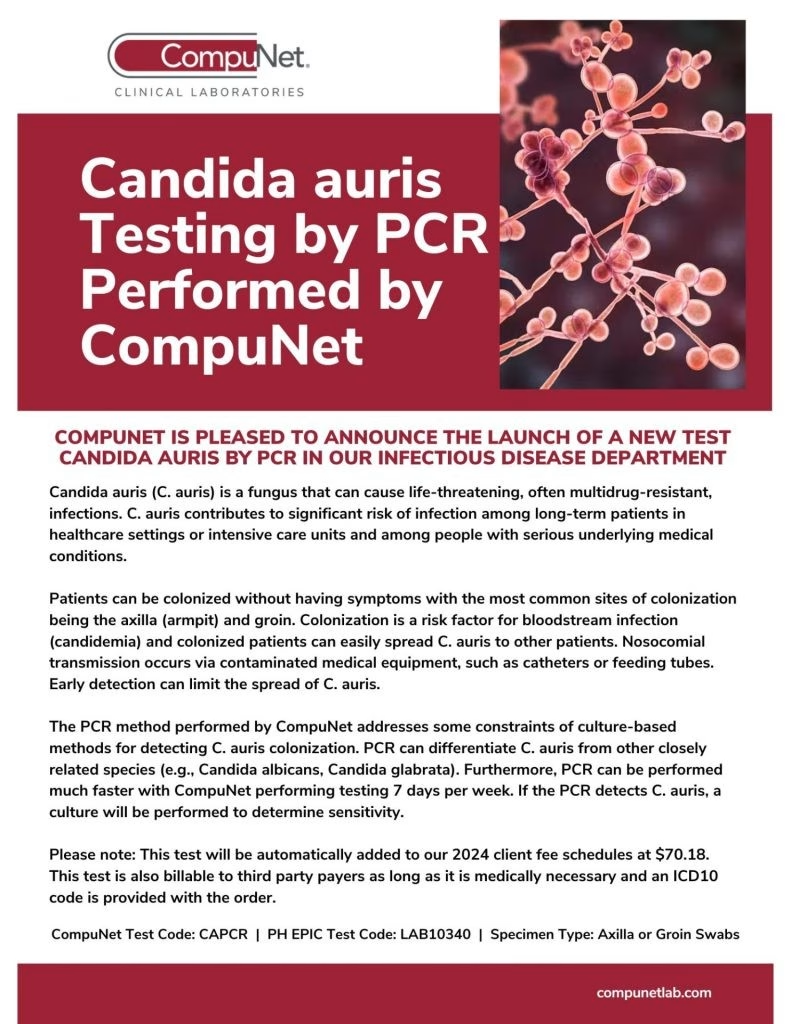
Candida auris testing plays a critical role in combating an emerging public health threat posed by multidrug-resistant fungal infections. With the rise of *Candida auris*, the need for robust antifungal susceptibility testing is more important than ever, as studies show that a staggering 95% of clinical isolates are resistant to fluconazole. This high rate of resistance highlights the ongoing challenges associated with antimicrobial resistance in healthcare settings, where *Candida auris* infections can lead to mortality rates as high as 60% among affected patients. By enhancing testing capabilities, healthcare providers can better understand *Candida auris resistance* patterns and implement effective treatment protocols. As the situation evolves, continuous monitoring of antifungal susceptibility will be essential in mitigating the risks associated with this formidable pathogen.
The evaluation of *C. auris* incidences is crucial as we face a growing concern regarding antifungal resistance in various pathogens. Through improved methodologies in identifying and analyzing these clinical isolates, public health organizations have gained insights into the prevalent strains of this yeast, contributing significantly to surveillance efforts. Enhanced awareness and diagnostic capabilities not only assist in patient management but also inform broader public health strategies aimed at curbing the spread of infections associated with antifungal resistance. Furthermore, as *Candida auris* continues to emerge in various geographic regions, targeted testing approaches can help delineate infection trends and resistance patterns, ultimately supporting healthcare systems in their fight against this pressing threat.
Understanding Candida auris and Its Resistance Patterns
Candida auris has emerged as a significant public health threat primarily due to its alarming rates of multidrug resistance. In recent years, particularly from 2022 to 2023, laboratory studies have shown that approximately 95% of tested *C. auris* isolates exhibited resistance to fluconazole, one of the most commonly used antifungal medications. This widespread resistance not only complicates treatment options but also heightens the risk of invasive infections, especially in healthcare settings where vulnerable populations reside.
Moreover, the rise in *Candida auris* infections has been alarming, with clinical case counts escalating dramatically from fewer than 100 in 2016 to over 4,500 in 2023. This surge underscores the urgency of enhancing antifungal susceptibility testing to effectively manage the spread of this pathogen. The persistence of high rates of antifungal resistance, including minimal resistance to echinocandins, highlights the need for vigilant surveillance and timely interventions in clinical environments.
The Role of Antifungal Susceptibility Testing in Mitigating Public Health Threats
Antifungal susceptibility testing plays a crucial role in identifying effective treatment regimens for patients infected with *C. auris*. Conducted by the Antimicrobial Resistance Laboratory Network, this testing is essential in determining the specific resistance patterns of clinical isolates, guiding clinicians to tailor appropriate antifungal therapies. By conducting robust testing and reporting results, healthcare providers can combat the emergence of resistance and minimize the risk of treatment failures.
Furthermore, the data generated from antifungal susceptibility testing informs public health strategies aimed at controlling and preventing outbreaks of *C. auris*. Understanding local resistance patterns enables health authorities to implement targeted interventions to protect at-risk populations. This underscores how critical ongoing surveillance and laboratory capabilities are in addressing *C. auris* as a growing public health threat.
Trends and Insights from the 2022-2023 Testing Data
The recent testing data from the Antimicrobial Resistance Laboratory Network reveals key trends in the prevalence of *C. auris* across the United States. Between 2022 and 2023, clinical isolate testing surged by 1.5 times, reflecting a broader increase in *C. auris* cases nationwide. Interestingly, the mean resistance rates vary by region, indicating that localized public health strategies may be necessary to address the specific challenges posed by *C. auris* in different geographical areas.
For example, while fluconazole resistance was consistently high across most regions, the Central region reported lower resistance rates. Meanwhile, regions like the Northeast saw strikingly high rates of amphotericin B resistance, necessitating tailored responses. This variance emphasizes the importance of regional monitoring and reporting in establishing effective treatment protocols and containment strategies.
Impact of Candida auris on Patient Care in Healthcare Settings
The presence of *Candida auris* in healthcare settings poses significant challenges for patient care, particularly for those with weakened immune systems. Infections caused by this resilient yeast can lead to severe health complications, including bloodstream infections and higher mortality rates. The transmission of *C. auris* in hospitals can compromise patient safety and raise the burden of healthcare-associated infections, prompting the need for stringent infection control measures.
As healthcare providers grapple with this growing threat, it becomes imperative to maintain rigorous adherence to infection prevention practices. This includes thorough hand hygiene, proper use of personal protective equipment, and environmental cleaning protocols. By implementing these strategies, healthcare facilities can help minimize the risk of *C. auris* transmission and protect vulnerable patients from potentially life-threatening infections.
Regional Variations in Candida auris Resistance Rates
The analysis of *Candida auris* resistance trends has highlighted significant regional variations in the United States. In the most recent data, the Midwest reported an 83% fluconazole resistance rate, which is notably lower than that of other regions, drawing attention to the need for localized public health strategies. In contrast, the Northeast presented alarming statistics, with resistance rates reaching as high as 44% for amphotericin B, underscoring the importance of adaptive public health responses.
These regional differences can be attributed to several factors, including healthcare practices, patient demographics, and the effectiveness of local infection control measures. Public health officials must consider these variations when developing surveillance and response plans to ensure that interventions are effective and tailored to the specific challenges faced in each area.
Preventive Measures Against Candida auris Infections
Preventing *Candida auris* infections requires a multifaceted approach that includes education, surveillance, and strict adherence to infection control protocols. Healthcare facilities must educate their staff about the importance of recognizing the signs of *C. auris* and implementing best practices for hand hygiene and environmental cleaning. These measures are vital for curbing the spread of this resistant organism in healthcare environments.
Moreover, regular training sessions and updates on the evolving landscape of *C. auris* infections can help staff stay vigilant against potential outbreaks. The integration of laboratory testing results into daily clinical practice can further enhance the early identification of *C. auris* strains and facilitate timely intervention, ultimately protecting patients from severe outcomes associated with this public health threat.
The Future of Antifungal Resistance and Candida auris
The rising threat of antifungal resistance, particularly with *Candida auris*, necessitates ongoing research and innovation in antifungal therapies. As resistance patterns evolve, it is critical for the scientific community to investigate new antifungal agents and treatment strategies that can effectively target resistant strains. Understanding the mechanisms of resistance will guide the development of novel therapeutics and tailor effective treatment options.
Furthermore, enhancing collaboration among public health entities, healthcare providers, and researchers is vital to combat the challenges posed by *C. auris*. By sharing knowledge and resources, stakeholders can implement effective monitoring programs, optimize treatment strategies, and reduce the incidence of infections, ultimately improving patient outcomes and public health.
Collaborative Surveillance Efforts for Candida auris
Collaboration among various healthcare and public health organizations is key to effectively monitoring and addressing the threats posed by *Candida auris*. The Antimicrobial Resistance Laboratory Network plays a vital role in this effort by testing clinical isolates and disseminating data that informs public health decisions. By sharing surveillance data regionally and nationally, healthcare agencies can better understand trends in resistance and infection rates.
Additionally, fostering partnerships between state and federal agencies encourages the seamless exchange of information, enabling timely responses to emerging threats. These coordinated efforts enhance public health responses to *C. auris*, resulting in more efficient allocation of resources and improved patient safety measures throughout the healthcare system.
The Critical Need for Continued Research on Candida auris
The urgency surrounding *Candida auris* necessitates continued research focused on its epidemiology, resistance characteristics, and treatment options. Understanding the genetic mechanisms underlying antifungal resistance will provide insights essential for the development of effective therapies. Furthermore, research must extend into preventive strategies, including vaccine development, to bolster defenses against *C. auris* infections.
As the threat of antimicrobial resistance looms, investment in research is paramount. Engaging a multidisciplinary approach, including microbiologists, epidemiologists, and public health experts, can yield significant findings that impact clinical practice and policy. By prioritizing research on *Candida auris*, we can better equip ourselves to tackle this profound public health challenge and improve outcomes for affected populations.
Frequently Asked Questions
What is Candida auris testing and why is it important?
Candida auris testing involves identifying the presence of Candida auris in clinical samples and performing antifungal susceptibility testing. It’s crucial because C. auris has emerged as a significant public health threat due to its multidrug resistance and association with high mortality rates in invasive infections.
How does Candida auris resistance affect antifungal treatment options?
Candida auris resistance significantly affects antifungal treatment options. In the 2022–2023 testing by the Antimicrobial Resistance Laboratory Network, 95% of isolates were resistant to fluconazole, which limits available treatment choices. Understanding this resistance is essential for effective clinical management.
What are the trends in Candida auris testing results from 2022 to 2023?
In 2022–2023, Candida auris testing revealed a 1.5-fold increase in clinical isolates, rising from 3,064 in 2022 to 4,969 in 2023. This trend reflects a growing prevalence of C. auris cases and stresses the importance of ongoing surveillance and susceptibility testing.
What are the common body sites for Candida auris isolates during testing?
The common body sites for Candida auris isolates tested during 2022–2023 included blood (36%) and urine (32%). Recognizing these sites helps healthcare providers focus on potential infection sources and implement appropriate testing.
How does antimicrobial resistance in Candida auris impact public health?
Antimicrobial resistance in Candida auris poses a significant public health challenge. The high resistance rates to key antifungals like fluconazole and amphotericin B complicate treatment strategies, making early detection and effective testing critical in healthcare settings.
What regions in the United States reported the highest rates of Candida auris resistance?
During 2022–2023 testing, the Northeast region showed particularly high rates of Candida auris resistance, with 44% of isolates resistant to amphotericin B and low echinocandin resistance rates. Tracking these regional variations is vital for focused public health interventions.
What is the role of the Antimicrobial Resistance Laboratory Network in Candida auris testing?
The Antimicrobial Resistance Laboratory Network plays a pivotal role in Candida auris testing by identifying clinical isolates and conducting antifungal susceptibility tests, guiding treatment decisions, and informing public health strategies against this emerging threat.
How has the number of Candida auris clinical cases changed in recent years?
The number of Candida auris clinical cases has escalated dramatically, from fewer than 100 cases in 2016 to over 4,500 cases in 2023. This increase highlights the urgency for improved Candida auris testing and surveillance efforts.
What percentage of Candida auris isolates tested were panresistant in the recent analysis?
In the recent analysis, less than 1% of the Candida auris isolates (16 out of 7,438) tested were panresistant. While this rate is low, it underscores the importance of continued monitoring and testing to prevent the spread of such resistant strains.
What are the implications of antifungal susceptibility testing for clinical practice regarding Candida auris?
Antifungal susceptibility testing for Candida auris is crucial for clinical practice as it directs treatment approaches. With rising resistance rates, particularly to fluconazole, understanding these patterns helps clinicians choose the most effective antifungal agents for patient care.
| Key Points | Data |
|---|---|
| Total Clinical Isolates Tested | 8,033 samples from 2022-2023 |
| Resistance to Fluconazole | 95% (7,244 samples) |
| Resistance to Amphotericin B | 15% (1,128 samples) |
| Resistance to Echinocandins | 1% (97 samples) |
| Increase in Case Counts (2016-2023) | From <100 to 4,500 cases (annual) |
| Source Regions of Isolates | West (24%), Southeast (21%), Northeast (19%) |
| Common Body Sites for Samples | Blood (36%), Urine (32%) |
| Yearly Increase in Isolates (2022 to 2023) | From 3,064 to 4,969 isolates |
Summary
Candida auris testing by the Antimicrobial Resistance Laboratory Network has proven critical in identifying and addressing the rising public health threat posed by Candida auris. As resistant strains become more prevalent, ongoing surveillance and effective antifungal treatment strategies are necessary to mitigate the impact of this multidrug-resistant fungus in healthcare settings.
The content provided on this blog (e.g., symptom descriptions, health tips, or general advice) is for informational purposes only and is not a substitute for professional medical advice, diagnosis, or treatment. Always seek the guidance of your physician or other qualified healthcare provider with any questions you may have regarding a medical condition. Never disregard professional medical advice or delay seeking it because of something you have read on this website. If you believe you may have a medical emergency, call your doctor or emergency services immediately. Reliance on any information provided by this blog is solely at your own risk.