


The topic of autism and vaccines has generated significant debate in public health discussions, particularly following recent actions by the Department of Health and Human Services (HHS). Amid growing concerns about the rise in autism diagnoses, the HHS has reshaped its federal autism committee to advise Secretary Robert F. Kennedy Jr. on the issue, even including members who promote the controversial view of a vaccine connection to autism. This committee aims to shed light on autism research, yet it has attracted scrutiny from experts who highlight the lack of scientific evidence supporting such claims. The involvement of anti-vaccine advocates raises questions about the committee’s direction and its potential impact on public perception of vaccines. As more Americans seek information about childhood vaccines and their safety, understanding the relationship between autism and vaccines continues to be a critical topic for public health and vaccines.
The relationship between developmental disorders and immunization practices has become a focal point in contemporary health discussions. Autism spectrum disorder (ASD) and its perceived links to vaccination have sparked a contentious dialogue, prompting various stakeholders to voice their opinions. Recent developments in the Interagency Autism Coordinating Committee have brought to light various perspectives, including those who support exploring alternative explanations for autism’s emergence. As debates intensify, the convergence of scientific inquiry and public opinion has never been more crucial in evaluating autism research and its implications for childhood vaccination policies. While some maintain skepticism towards traditional vaccine narratives, the scientific consensus largely dismisses any direct correlation between vaccinations and the onset of autism.
Understanding the Role of HHS in Autism Research
The Department of Health and Human Services (HHS) plays a crucial role in advancing autism research and public health initiatives. Recently, the HHS has revamped the Interagency Autism Coordinating Committee by introducing 21 new members, including medical professionals, individuals with disabilities, and autism advocates. This committee aims to synthesize various perspectives on autism research and ensure that decisions regarding funding and policy reflect the diverse needs of the autistic community. The inclusion of members with differing views, including those associated with anti-vaccine sentiments, sparks a debate about the implications of their beliefs on the committee’s work and public health messaging surrounding autism.
Secretary Robert F. Kennedy Jr. has emphasized the need to modernize autism research, which he believes lags behind other medical fields. His administration is keen on exploring all possible environmental factors related to autism, including vaccinations, which have become a contentious point among public health officials and anti-vaccine advocates. The committee’s newly broadened membership is expected to tackle this complex intersection of autism research and public health policy, addressing the pressing concerns of families while scrutinizing the scientific validity of various claims regarding autism and its possible environmental triggers.
Vaccines and Autism: Debunking the Myths
The vaccine-autism debate remains one of the most controversial topics in health care. Despite extensive research and solid consensus among experts that childhood vaccines do not cause autism, this narrative continues to persist. The recent changes to the CDC’s language regarding vaccines and autism, led by Secretary Kennedy, have only reignited concerns among parents and fueled discussions among anti-vaccine advocates. While many studies emphasizing the safety of vaccines exist, the shift in messaging has created confusion, giving an appearance of uncertainty that undermines public trust in vaccination programs.
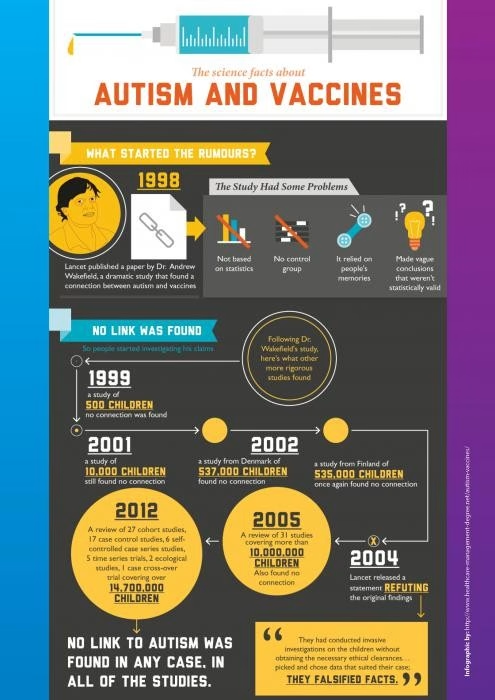
It is important to clarify that a significant body of autism research has provided robust evidence against any link between vaccines and autism. Numerous studies, including comprehensive reviews conducted by the World Health Organization, have consistently shown no causal relationship between vaccination and autism. Nevertheless, the voices of those who believe in a connection continue to influence public discourse, promoting misinformation. Addressing these myths is critical for public health and ensures that future generations receive vaccinations that protect them against preventable diseases.
The Impact of Anti-Vaccine Sentiments on Public Health
Anti-vaccine sentiments can have profound implications for public health, particularly concerning diseases that are preventable through vaccination. The inclusion of anti-vaccine advocates in the revamped Interagency Autism Coordinating Committee raises pressing questions about how their perspectives may shape future autism research and policy decisions. As these members advocate for alternative beliefs regarding vaccines and autism, there is a real risk that they may undermine public health initiatives aimed at ensuring high vaccination rates, which are essential for herd immunity and the prevention of outbreaks.
Public health authorities must engage effectively with communities skeptical about vaccines, particularly when misinformation spreads quickly through social media platforms. It is vital to promote transparent communication about the science behind vaccines, addressing concerns and clarifying misunderstandings. The challenge lies not only in respecting diverse opinions but also in asserting the importance of scientifically validated information. Only by overcoming resistance to vaccinations can we ensure that the health of future generations remains safeguarded against both autism and preventable diseases linked to declines in vaccine uptake.
Evaluating Autism Advocacy and Research Priorities
The recent changes in the HHS committee composition have raised questions about the direction of autism advocacy and research priorities. By incorporating a range of viewpoints, including those who argue for alternative treatment options, there is a potential shift in how research funds may be allocated. While broadening the conversation can foster an inclusive atmosphere, it also raises concerns about legitimizing ideas not supported by robust scientific evidence. Advocating for the needs of individuals with autism must remain grounded in evidence-based practice, ensuring that autistic voices are prioritized without compromising scientific integrity.
As the autism research landscape evolves, it is essential to maintain a clear focus on scientifically substantiated findings while navigating the complex narratives presented by various advocacy groups. The challenge lies in discerning which perspectives genuinely advance our understanding of autism and which may lead to the propagation of misinformation. As such, rigorous oversight and dialogue are paramount, bridging the gap between advocacy and scientific inquiry to formulate effective policies that serve autistic individuals and their families.
The Future Outlook for Autism Research
With the recent restructuring of the Interagency Autism Coordinating Committee, the trajectory of autism research may undergo significant shifts. The focus on various environmental factors, including the controversial point of vaccines, indicates an exploration of ideas that may have been previously sidelined in mainstream discussion. This broader perspective could open avenues for new hypotheses but must be approached with caution to avoid veering into unverified territories. Ongoing scrutiny and scientific validation are essential to ensure that research informs public health policies effectively.
The landscape of autism research is continuously evolving, with stakeholders advocating for a more comprehensive understanding of autism’s multifaceted nature. As researchers build upon existing data and insights, collaboration among diverse groups, including those with differing opinions on vaccines, must be encouraged but measured. The ultimate goal remains to enhance outcomes for individuals with autism while disassociating from unsupported claims that may hinder progress. Focusing on scientifically rigorous inquiry will be critical as our understanding of autism deepens and more informed policies emerge.
The Role of Parents in Autism Awareness
Parents of children with autism often find themselves at the forefront of advocacy, bridging the gap between research and the practical needs of their families. Their experiences shape awareness, influencing community actions and policy decisions regarding autism. As members of the Interagency Autism Coordinating Committee, parent representatives can share invaluable insights that reflect the challenges and triumphs faced in daily life. Through their involvement, they can advocate for research that directly addresses the lived experiences of individuals with autism and their families, helping to prioritize pressing needs in the research agenda.
Moreover, the engagement of parents in autism advocacy can foster greater public understanding of autism’s complexities and the importance of supporting evidence-based vaccination strategies. Parents often serve as the voices of reason, emphasizing the need to protect their children from preventable diseases while ensuring that their unique experiences are acknowledged by researchers and policymakers. This collaboration is vital for developing effective support systems, ensuring that families affected by autism receive the resources and respect they deserve.
Navigating the Intersection of Science and Advocacy
Navigating the intersection of science and advocacy in the autism community presents unique challenges and opportunities. The voices of researchers and advocates need to converge to ensure that the interests of individuals with autism are represented in research endeavors. Yet, tensions can arise when certain advocacy platforms endorse claims not supported by scientific data, particularly regarding vaccines and autism. Maintaining a delicate balance between honoring diverse perspectives and adhering to science-based principles is crucial for the advancement of autism research and policy.
Encouraging collaboration among scientists, advocates, and families can create a more holistic understanding of autism. Effective dialogue allows stakeholders to address misconceptions while highlighting the importance of evidence-based research, particularly concerning vaccines and their role in public health. It is essential to cultivate an environment where scientific inquiry is respected and welcomed, enabling progress without dismissing the voices of advocacy. Ultimately, this synergistic approach can lead to greater awareness, funding support, and research outcomes that truly benefit the autism community.
The Importance of Evidence-Based Policy in Autism Initiatives
The formulation of policies surrounding autism research and public health must revolve around evidence-based principles. The unprecedented changes observed within the HHS committee suggest a shift that could impact how autism research is prioritized and conducted. It is crucial to uphold standards that demand rigorous scientific evaluation of all claims, especially those linking vaccines and autism. Policymakers have a responsibility to weigh the findings of an extensive body of research against anecdotal assertions that lack substantiation.
Adopting an evidence-based approach in autism initiatives ensures that the focus remains on effective treatments, early intervention strategies, and prevention measures. By reinforcing policies grounded in research, stakeholders can combat misinformation pervading public discourse, particularly from anti-vaccine advocates. Public health initiatives should aim to educate and empower communities with facts, driving home the importance of vaccines in protecting children from diseases while supporting the needs of individuals diagnosed with autism.
Fostering Community Engagement in Autism Conversations
Community engagement plays a pivotal role in shaping the conversation around autism, particularly as it relates to vaccines and public health. Engaging families, advocates, and healthcare professionals in dialogue encourages diverse input and fosters a collective understanding of the autism spectrum. Creating platforms for open discussion allows for addressing fears, dispelling myths, and sharing experiences in an informed manner. Communities benefit when they come together to support those affected by autism, emphasizing the importance of vaccinations in safeguarding overall health.
Moreover, by promoting engagement, stakeholders can work towards uniting varying opinions and experiences under a banner of mutual respect and collaboration. The inclusion of diverse voices, including those who may hold skeptical views about vaccines, is crucial in understanding the concerns that parents face. This engagement cultivates a more informed public that can make educated decisions about vaccinations and autism care. Indeed, a well-informed community, equipped with clear and accessible information, is vital for fostering a supportive environment for families navigating the complexities of autism.
Frequently Asked Questions
What is the connection between vaccines and autism according to the HHS autism committee?
The HHS autism committee has included members who advocate for the belief that there may be a connection between vaccines and autism. This perspective has been controversial, as the majority of autism researchers conclude, based on extensive studies, that vaccines do not cause autism. While Secretary Kennedy believes environmental toxins contribute to autism, the scientific consensus remains that vaccines are safe and do not pose a risk for developing autism.
How has the U.S. government’s stance on vaccines and autism changed recently?
Recently, under the direction of Secretary Robert F. Kennedy Jr., the U.S. government modified its messaging concerning vaccines and autism. The CDC previously stated that studies show no link between vaccines and autism, but this has been changed to reflect a perspective stating that ‘studies have not ruled out the possibility that infant vaccines cause autism.’ This shift has raised concerns among public health officials as it contradicts decades of research.
What does autism research say about the vaccine connection?
Autism research consistently indicates that there is no causal relationship between childhood vaccines and autism. A comprehensive review of 31 studies conducted from 2010 to 2025 by the World Health Organization affirmed that there is no evidence to support the claim that vaccines cause autism, emphasizing that this idea is not supported by scientific data.
What role do anti-vaccine advocates play in the discussion about autism and vaccines?
Anti-vaccine advocates have a significant influence on public perceptions of vaccines and their alleged connection to autism. With the addition of these members to the HHS autism committee, such advocates are positioned to promote alternative narratives, which may challenge the existing scientific consensus that vaccines are safe and do not lead to autism. This can contribute to vaccine hesitancy among parents.
Why is the association between autism and vaccines a public health concern?
The association between autism and vaccines remains a public health concern due to the potential increase in vaccine hesitancy fueled by misinformation. If parents choose not to vaccinate their children based on the unfounded belief that vaccines cause autism, this could lead to outbreaks of preventable diseases, undermining public health efforts and endangering community immunity.
| Key Point | Details |
|---|---|
| HHS Committee Updates | 21 new members added to the Interagency Autism Coordinating Committee (IACC), including various stakeholders. |
| Leadership Views | Secretary Robert F. Kennedy Jr. emphasizes research into autism causes, linking potential environmental toxins with rising autism diagnoses. |
| Vaccine Controversy | Kennedy supports the theory that childhood vaccines may be linked to autism, contradicting established scientific consensus. |
| CDC Language Shift | CDC modified statements about vaccines and autism, leading to increased confusion regarding established scientific evidence. |
| Expert Reviews | A WHO review found no evidence of a link between vaccines and autism across 31 studies published from 2010 to 2025. |
Summary
The intersection of autism and vaccines remains a contentious topic, especially following the recent changes in the HHS committee structure. The inclusion of members who support the notion of a vaccine-autism link raises significant concerns about public health messaging and scientific integrity. Despite overwhelming evidence disproving any causative relationship between vaccines and autism, the dialogue surrounding this issue continues to evolve, influenced by political and personal beliefs rather than scientific consensus. It is crucial to rely on credible research and expert reviews when discussing autism and vaccines to ensure that public health policies are based on facts rather than misinformation.
The content provided on this blog (e.g., symptom descriptions, health tips, or general advice) is for informational purposes only and is not a substitute for professional medical advice, diagnosis, or treatment. Always seek the guidance of your physician or other qualified healthcare provider with any questions you may have regarding a medical condition. Never disregard professional medical advice or delay seeking it because of something you have read on this website. If you believe you may have a medical emergency, call your doctor or emergency services immediately. Reliance on any information provided by this blog is solely at your own risk.