

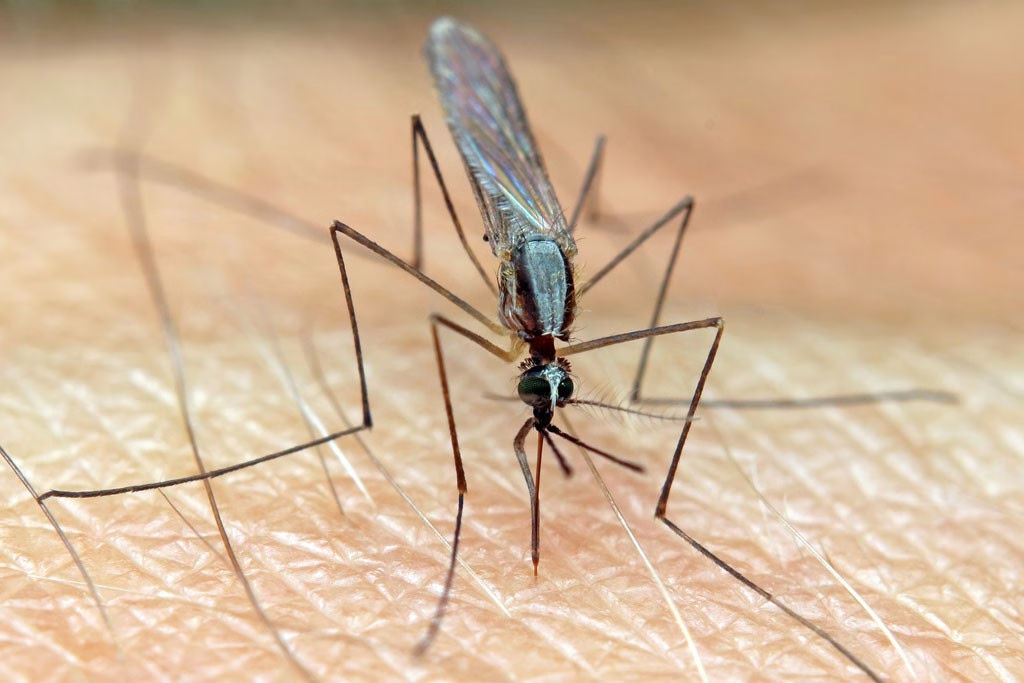
Tropical mosquitoes are notorious not just for their irritating bites but also for their significant role in the spread of mosquito-borne diseases around the world. Research indicates that these disease-carrying mosquitoes can transport pathogens like arboviruses over vast distances, making them a serious threat to public health. With species such as Aedes and Culex leading the charge, the migration patterns of tropical mosquitoes can influence the transmission dynamics of several debilitating diseases, including dengue and malaria. The discovery of such pathogens in high-altitude populations points to an alarming potential for pathogen transmission by mosquitoes far beyond their usual habitats. Understanding these vectors’ migration and infection rates is crucial for effectively managing and mitigating the risks of these infectious diseases.
Known for their resilience and adaptability, mosquitoes that thrive in tropical climates are often referred to as vectors of illness due to their capability to spread serious pathogens. These flying nuisances are not only adept at surviving in humid environments but also at migrating long distances, carrying with them a host of arboviruses that can lead to significant outbreaks. The relationship between environmental conditions and the behavior of these invasive insects is critical, as it underlines how high-altitude mosquitoes can still play a role in disease transmission. Additionally, as the patterns of these disease-carrying mosquitoes evolve, so too does the necessity for public health strategies that recognize the broader implications of their migration, keeping in mind the potential for outbreaks in previously unaffected areas.
Understanding Tropical Mosquito Behavior
Tropical mosquitoes exhibit remarkable adaptability, allowing them to thrive in diverse environments across different altitudes. Recent research highlights how these insects can be found at striking heights, such as the windswept regions of Mali and Ghana, where researchers collected specimens at altitudes between 120 and 290 meters. This study sheds light on their migratory patterns and emphasizes their ability to travel vast distances, aided by favorable wind conditions. Such long-range migrations not only increase their potential for reproduction but also enhance their capacity to invade new territories.
These high-flying tropical mosquitoes are not mere passive travelers; their behavior significantly influences their interactions with the ecosystem. As they ascend and descend in the atmosphere, they may also inadvertently transport disease-carrying pathogens to regions far removed from their origin. This newfound understanding challenges previous notions of mosquito behavior and underlines the importance of studying these insects not only within their local habitats but also in the broader context of their migratory journeys.
Frequently Asked Questions
What are tropical mosquitoes and their role in disease transmission?
Tropical mosquitoes are species of mosquitoes that thrive in warm climates and are known for their ability to carry and transmit disease-causing pathogens. They are significant vectors for various mosquito-borne diseases such as dengue, malaria, and Zika virus, making them a major public health concern in tropical regions.
How do tropical mosquitoes spread mosquito-borne diseases?
Tropical mosquitoes spread mosquito-borne diseases through their bites when they feed on the blood of humans or animals infected with viruses or parasites. The pathogens replicate within the mosquito and can be transmitted to other hosts during subsequent feedings, leading to outbreaks of diseases such as dengue and West Nile virus.
What types of pathogens are carried by tropical mosquitoes?
Tropical mosquitoes can carry a range of pathogens, including arboviruses like dengue and Zika virus, as well as protozoans and parasitic worms that cause diseases such as malaria and lymphatic filariasis. These diseases not only affect humans but can also circulate among animal populations.
What is the significance of high-altitude mosquitoes in pathogen transmission?
High-altitude tropical mosquitoes can migrate long distances due to wind currents, potentially spreading disease over hundreds of kilometers. Their ability to carry pathogens at high altitudes raises concerns about the geographic expansion of mosquito-borne diseases beyond traditional boundaries.
How do environmental factors influence the spread of tropical mosquitoes and their diseases?
Environmental factors such as temperature, humidity, and wind patterns play a crucial role in the distribution and migration of tropical mosquitoes. Changes in these factors can affect mosquito survival rates, reproductive opportunities, and the ability to transmit pathogens, thereby influencing the dynamics of mosquito-borne diseases.
What precautions can be taken to prevent mosquito-borne diseases from tropical mosquitoes?
To prevent mosquito-borne diseases transmitted by tropical mosquitoes, individuals should consider using insect repellent, wearing protective clothing, and eliminating standing water where mosquitoes breed. Additionally, public health measures should include monitoring mosquito populations and implementing rapid-response strategies during disease outbreaks.
Are there any emerging threats related to tropical mosquitoes and disease transmission?
Yes, emerging threats related to tropical mosquitoes include the increased spread of arboviruses due to climate change, which may enable mosquitoes to inhabit new areas. Additionally, resistance to insecticides in tropical mosquito populations poses challenges to controlling their spread and transmission of diseases.
| Key Point | Details |
|---|---|
| Study Overview | First study to capture high-flying tropical mosquitoes over Mali and Ghana to examine pathogen infections. |
| Types of Pathogens | Mosquitoes infected with arboviruses, protozoans, and parasitic worms linked to diseases like dengue, malaria, and lymphatic filariasis. |
| Research Method | Captured 1,017 mosquitoes at altitudes of 120 to 290 meters using nets from helium balloons. |
| Infection Rates | Infection rates: 7.2% for Plasmodium, 1.6% for roundworms, 3.5% for flaviviruses. |
| Pathogen Circulation | Twenty-one mosquito-borne pathogens identified that infect vertebrates including human diseases. |
| Transmission Mechanism | High rates of infections indicate mosquitoes capable of transmitting pathogens upon arriving in new areas. |
| Public Health Implications | Urgent need for monitoring and rapid response to the spread of mosquito-borne diseases. |
Summary
Tropical mosquitoes pose significant threats to global health due to their ability to carry and transmit various pathogens over long distances. This research highlights the critical need to understand the migration patterns of these mosquitoes, as they can spread diseases like dengue and malaria hundreds of kilometers away. Proper monitoring and public health protocols are essential to mitigate the risks associated with their movements and safeguard vulnerable populations from disease outbreaks.
The content provided on this blog (e.g., symptom descriptions, health tips, or general advice) is for informational purposes only and is not a substitute for professional medical advice, diagnosis, or treatment. Always seek the guidance of your physician or other qualified healthcare provider with any questions you may have regarding a medical condition. Never disregard professional medical advice or delay seeking it because of something you have read on this website. If you believe you may have a medical emergency, call your doctor or emergency services immediately. Reliance on any information provided by this blog is solely at your own risk.