

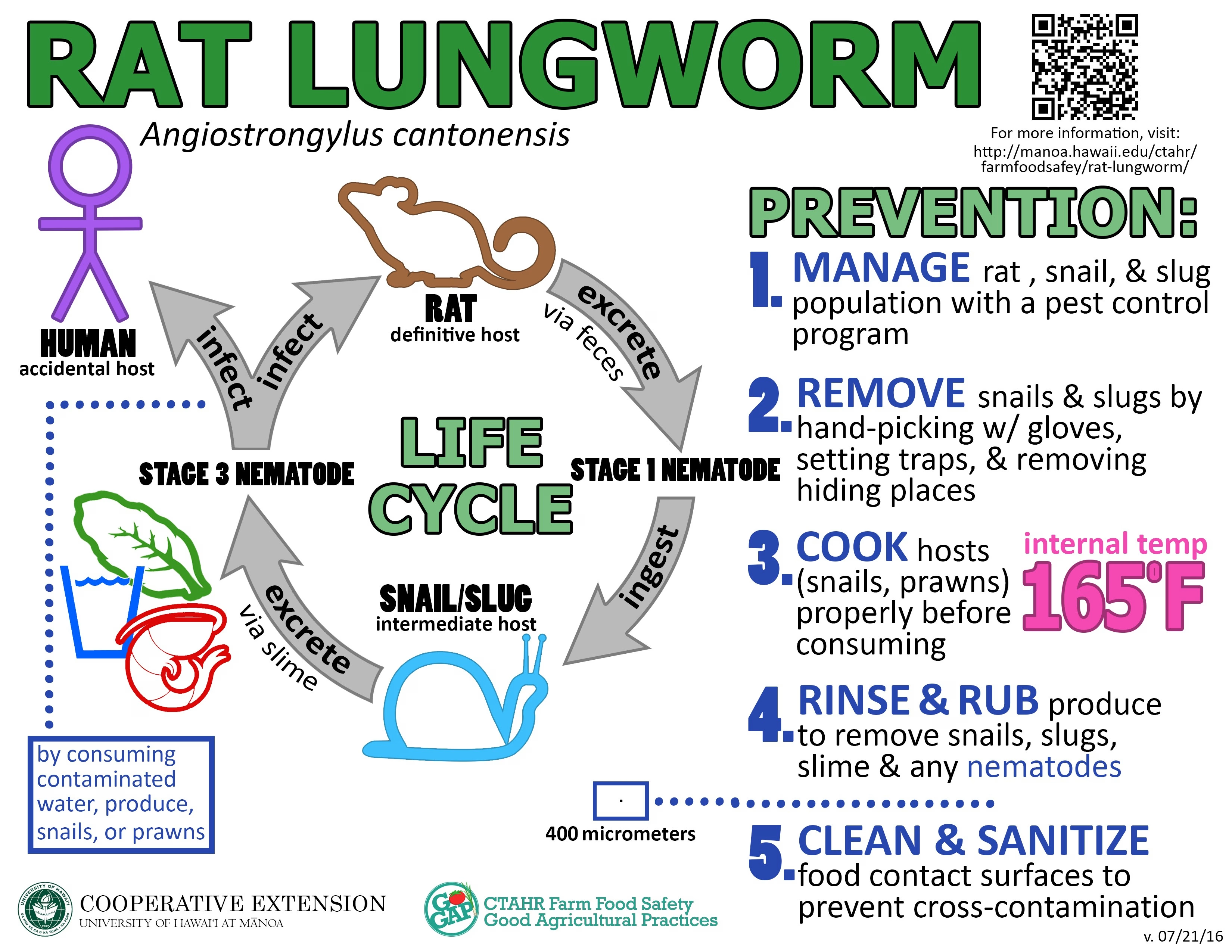
Rat lungworm, scientifically known as _Angiostrongylus cantonensis_, has become a pressing issue in public health, particularly in areas like San Diego, California. This invasive, zoonotic metastrongyle nematode is known to cause serious neurological diseases in both humans and various animal species. With its lifecycle primarily involving rats as definitive hosts, infections often occur through the consumption of infected snails or slugs, posing a considerable risk for zoonotic infections. Recent studies in San Diego have highlighted the alarming presence of _A. cantonensis_ in local wildlife, including parma wallabies and Virginia opossums, raising concerns about transmission pathways. Awareness and understanding of this emerging threat are critical for effective prevention and management strategies in affected regions.
The parasitic organism _Angiostrongylus cantonensis_, commonly referred to as rat lungworm, represents an important public health challenge, particularly in regions experiencing a rise in zoonotic infections. Known for causing profound neurological disorders, this metastrongyle nematode typically infects rodents, which serve as its primary hosts, while also impacting various accidental hosts. In recent findings from San Diego, significant occurrences of rat lungworm have been documented in local wildlife, including opossums and wallabies, suggesting a potential ecological imbalance and an increased risk of infections in surrounding communities. The implications of these infections extend beyond wildlife, necessitating broader awareness of the neurological diseases associated with _A. cantonensis_ and the importance of ongoing research to combat this health threat. Recognizing alternative descriptors and connections within this context helps to enrich our understanding of the routes through which this parasite spreads.
Understanding Rat Lungworm Infections
Rat lungworm, scientifically known as _Angiostrongylus cantonensis_, is increasingly recognized as a major zoonotic infection affecting a range of hosts, including humans and various mammals. This metastrongyle nematode thrives in rodent populations, with a complex life cycle that primarily involves gastropod intermediate hosts. The implications of this parasitic infection are profound, particularly in urban areas like San Diego, where interactions between wildlife and human populations are common.
In recent studies conducted in San Diego, California, infections of _A. cantonensis_ have been reported in both accidental hosts, such as a parma wallaby, and in definitive hosts like roof rats. These findings underscore the importance of public health monitoring in areas where the parasite is becoming endemic. Understanding the epidemiology of rat lungworm is critical for developing effective intervention strategies to mitigate the risks it poses to both animal and human health.
The Impact of Angiostrongylus cantonensis on Neurological Health
_Angiostrongylus cantonensis_ is primarily known for causing neurological disease in affected hosts, leading to a range of severe clinical symptoms. In the case of the parma wallaby studied in San Diego, symptoms included ataxia, central blindness, and other neurological deficits culminating in severe outcomes following a short hospitalization. The pathological findings illustrated the devastating effects of this parasite on the central nervous system, emphasizing its potential to cause significant morbidity in infected animals.
The neurological implications extend beyond wildlife, as human cases have also been documented, often linked to the consumption of infected hosts or contaminated food sources. This zoonotic nature of the infection highlights the need for increased awareness among healthcare providers regarding angiostrongyliasis, particularly in regions where free-ranging populations of _A. cantonensis_ are present. The distinction between accidental and definitive hosts is crucial for understanding the dynamics of infection and for raising public health awareness.
Zoonotic Infections and Their Public Health Implications
Zoonotic infections represent a significant challenge to public health systems, and _Angiostrongylus cantonensis_ is a noteworthy example. As an emerging parasite in areas such as the southern United States, understanding the transmission routes of this nematode is vital for reducing the risk of human infection. With potential sources ranging from wild rodents to intermediate hosts such as slugs and snails, the pathways through which _A. cantonensis_ can reach humans must be thoroughly examined.
Public health initiatives must focus on education and proactive measures to minimize contact between humans and potential hosts. In urban settings like San Diego, where wildlife integration in human environments occurs frequently, awareness campaigns about the risks associated with handling wildlife or consuming contaminated produce can be invaluable. In addition, monitoring wildlife populations for signs of _Angiostrongylus cantonensis_ is crucial in detecting outbreaks and implementing strategies to prevent zoonotic transmission.
The Role of Wildlife Rehabilitation in Monitoring Infections
Wildlife rehabilitation centers play a pivotal role in monitoring infections like those caused by _A. cantonensis_. By providing care to sick or injured wildlife, these facilities can gather crucial data on the health status of local populations, including those with potential parasitic infections. For instance, the assessment of juvenile Virginia opossums in San Diego revealed multiple instances of eosinophilic meningitis linked to _A. cantonensis_, highlighting the importance of such rehabilitative efforts in documenting the prevalence of this pathogen in wildlife.
This type of monitoring enables researchers to track the spread of the rat lungworm and assess the health of various species across the region, ultimately providing insights into the ecological impact of this parasite. By collaborating with veterinary services, wildlife rehabilitation can also aid in educating the public about the implications of these zoonotic infections and foster greater understanding of health risks associated with wildlife encounters.
Investigating Intermediate Hosts of Rat Lungworm
Understanding the role of intermediate hosts is essential for controlling the spread of _Angiostrongylus cantonensis_. The parasite typically cycles through gastropod hosts, which ingest larvae and subsequently infect definitive hosts like rodents. In studies conducted in San Diego, researchers collected free-ranging slugs to investigate their potential as carriers of rat lungworm larvae. Discovering infected intermediate hosts is crucial in establishing the full transmission dynamics of the parasite and implementing control strategies.
Efforts to identify and analyze these hosts can provide valuable information regarding the environmental conditions that favor the survival and transmission of _A. cantonensis_. Monitoring their populations, along with the surrounding ecosystem, can help predict potential outbreaks in nearby urban areas. Furthermore, educating the community about the significance of avoiding contact with these intermediate hosts can reduce infection risks and promote public health.
The Geographic Expansion of Angiostrongylus cantonensis
Since its discovery in southern China in 1935, _Angiostrongylus cantonensis_ has spread widely, with autochthonous infections reported in various states across the continental United States. The parasite’s expanding geographic range raises concerns about potential outbreaks as environmental conditions become more favorable for its survival and reproduction. San Diego’s warm climate and diverse wildlife population may serve as a suitable habitat for this parasite, making vigilance critical in controlling its spread.
As new cases emerge, it becomes increasingly important for health authorities to monitor the presence of _A. cantonensis_ across various ecosystems. Increased surveillance can help identify hot spots of infection, allowing for swift public health responses. Moreover, research into patterns of movement and distribution among wildlife populations can uncover insights into the factors driving the expansion of this zoonotic infection.
Clinical Symptoms Associated with Angiostrongyliasis
In both animal and human cases, the clinical symptoms of angiostrongyliasis can be severe and varied. In infected wildlife, like the parma wallaby and Virginia opossums reported in San Diego, neurological signs commonly include ataxia, circling, and even paralysis. The visceral manifestation of the disease can lead to catastrophic outcomes, positioning it as a significant concern for wildlife rehabilitation professionals who often encounter these cases.
For humans, the symptoms can range from mild to severe, with some individuals experiencing eosinophilic meningitis or other neurological complications. Awareness among healthcare providers regarding these symptoms is essential to ensure timely diagnosis and treatment. Furthermore, educating communities in regions where _A. cantonensis_ is prevalent will help them recognize potential signs of infection and seek medical attention promptly.
Surveillance and Control Efforts Against Zoonotic Parasites
Effective surveillance and control strategies are vital in managing the risks associated with zoonotic parasites like _Angiostrongylus cantonensis_. Public health authorities are increasingly focusing on monitoring wildlife populations as potential reservoirs of infection, particularly in areas where human cases have been reported. Collaboration between veterinarians, wildlife biologists, and epidemiologists can enhance the effectiveness of these surveillance programs.
Furthermore, incorporating public education initiatives will empower residents of affected regions to contribute to prevention efforts. By understanding the transmission routes of _A. cantonensis_ and the critical role that both definitive and intermediate hosts play in its cycle, communities can engage in practices that minimize risk, such as controlling snail populations or avoiding contact with potentially infected wildlife.
Conclusion: The Importance of Addressing Rat Lungworm Infections
Addressing rat lungworm infections caused by _Angiostrongylus cantonensis_ is essential not only for animal health but also for human public health safety. As regions like San Diego continue to see emergent cases, it is vital for health authorities, wildlife organizations, and the community to collaborate in managing this zoonotic threat. Continuous research, education, and intervention strategies will play pivotal roles in controlling the spread of this infection.
In summary, recognizing the implications of _A. cantonensis_ infections underscores the need for vigilance in both veterinary and public health sectors. By fostering an environment of awareness and proactive management, we can greatly mitigate the risks posed by this emerging zoonotic parasite.
Frequently Asked Questions
What is rat lungworm, and how does it affect humans?
Rat lungworm, scientifically known as _Angiostrongylus cantonensis_, is a zoonotic metastrongyle nematode that can cause severe neurological disease in humans. Infection typically occurs after consuming raw or undercooked snails, slugs, or contaminated vegetables, which harbor the parasite’s larvae. Symptoms can include headaches, neck stiffness, tingling in the skin, and in severe cases, meningitis.
How can I prevent infection from rat lungworm in San Diego?
To prevent infection from rat lungworm (_Angiostrongylus cantonensis_) in San Diego, avoid consuming raw or undercooked snails, slugs, and contaminated leafy greens. Wash vegetables thoroughly and ensure that local wildlife interactions, particularly with rodents or gastropods, are minimized as these can carry the parasite.
What animals are affected by rat lungworm?
Rat lungworm (_Angiostrongylus cantonensis_) primarily affects rodents, which are considered the definitive hosts. However, it can also infect a variety of accidental hosts including humans, parma wallabies, Virginia opossums, and other vertebrates, leading to neurological diseases in these species.
Is rat lungworm endemic in California?
Yes, rat lungworm (_Angiostrongylus cantonensis_) has been reported in various parts of California, including San Diego. While it is more commonly noted in tropical regions, emerging cases in local wildlife indicate that the parasite is now considered endemic in certain areas, posing risks to both animal and human health.
What are the symptoms of rat lungworm infection in animals?
In animals, particularly those that are accidental hosts, symptoms of rat lungworm infection may include neurological issues such as ataxia, circling, head tilt, and respiratory distress. These signs stem from inflammation and damage caused by the parasite in the central nervous system.
How is rat lungworm diagnosed in veterinary settings?
Rat lungworm (_Angiostrongylus cantonensis_) is diagnosed through clinical observation and confirmed with necropsy or post-mortem examinations. Identification of the parasite typically involves histopathological analysis or molecular methods, such as PCR, to analyze tissue samples.
What role do slugs and snails play in the life cycle of rat lungworm?
Slugs and snails serve as intermediate hosts for the rat lungworm (_Angiostrongylus cantonensis_), where the parasite develops into its infective larval stage. Rodents may become infected by consuming these gastropods, which carry the parasite’s larvae, facilitating its lifecycle.
Are there any recent cases of rat lungworm reported in San Diego?
Yes, recent studies have documented infections of rat lungworm (_Angiostrongylus cantonensis_) in San Diego, California, in animals like parma wallabies and Virginia opossums, indicating the presence of the parasite in local wildlife populations and the potential risk to humans.
What neurological diseases are associated with rat lungworm?
Rat lungworm (_Angiostrongylus cantonensis_) is known to cause severe neurological diseases including eosinophilic meningitis and associated symptoms, such as headaches, neck stiffness, and neurological deficits in both humans and affected animals.
What should I do if I suspect a rat lungworm infection?
If you suspect a rat lungworm infection, seek medical attention immediately. Early intervention is crucial in managing symptoms associated with _Angiostrongylus cantonensis_, especially if neurological symptoms present.
| Key Points | Details |
|---|---|
| What is Rat Lungworm? | _Angiostrongylus cantonensis_ is a nematode that causes neurological disease in various vertebrate hosts, including humans. |
| Transmission | Transmission occurs through the ingestion of third-stage larvae (L3) from gastropod intermediate hosts. |
| Spread of the Parasite | Initially discovered in China, _A. cantonensis_ has spread to Hawaii and various states in the continental U.S., particularly in the Southeast. |
| Recent Infections in San Diego | Cases observed in a parma wallaby, Virginia opossums, and roof rats, indicating autochthonous infections. |
| Symptoms in Hosts | Neurological symptoms in parma wallaby and opossums included ataxia, head tilt, and respiratory distress. |
| Importance of Findings | Emphasizes the need for awareness of angiostrongyliasis in cases of central nervous system disease in both humans and animals. |
Summary
Rat lungworm (_Angiostrongylus cantonensis_) presents a growing threat within veterinary and public health sectors, particularly evident in recent infections across San Diego, California. The findings highlight the significant risks posed by this parasitic nematode to both definitive and accidental hosts, including humans. With observed cases among local wildlife such as a parma wallaby and Virginia opossums, the autochthonous spread of this parasite necessitates heightened awareness and research to mitigate its impact on public health. Identifying and understanding the prevalence of rat lungworm is crucial for preventive health measures and ensuring the well-being of affected animal populations.
The content provided on this blog (e.g., symptom descriptions, health tips, or general advice) is for informational purposes only and is not a substitute for professional medical advice, diagnosis, or treatment. Always seek the guidance of your physician or other qualified healthcare provider with any questions you may have regarding a medical condition. Never disregard professional medical advice or delay seeking it because of something you have read on this website. If you believe you may have a medical emergency, call your doctor or emergency services immediately. Reliance on any information provided by this blog is solely at your own risk.