

Thermotolerant Tepidimonas bacteria represent a fascinating and previously under-explored group of microorganisms that have significant implications for both environmental studies and human health. Recent research published in *Emerg Infect Dis* highlighted the detection of *Tepidimonas sp.* in human respiratory specimens, emphasizing the need for novel bacteria detection strategies. These thermotolerant bacteria thrive in a variety of extreme environments, making them a topic of great interest in microbiology and infectious disease research. As scientists continue to uncover their unique properties and potential pathogenicity, understanding Thermotolerant Tepidimonas may lead to advancements in clinical diagnostics and treatment. This growing body of knowledge is crucial in an era where emerging infections challenge our healthcare systems.
The exploration of thermophilic and mesophilic bacteria, such as *Tepidimonas*, has unveiled remarkable insights into how these organisms can adapt to fluctuating temperatures and environments. Identifying these unique bacterial strains, particularly in human samples, plays a critical role in public health. By focusing on these emerging pathogens, researchers are equipped to develop more effective methods for tracking and managing infectious diseases. As we delve deeper into the world of thermotolerant microorganisms, the implications for novel detection methodologies become more evident, highlighting the intricate relationships between human health and environmental microbiomes. Understanding thermotolerant Tepidimonas not only broadens our scientific horizons but also enhances our capabilities in addressing the challenges posed by emerging infections.
Understanding Thermotolerant Tepidimonas Bacteria
Thermotolerant Tepidimonas bacteria represent a unique group of microorganisms that thrive in moderately high temperatures and are increasingly recognized in clinical microbiology. These bacteria, identified in human respiratory specimens, have raised both interest and concern among researchers and healthcare professionals. Their capability to survive in thermal conditions signifies their adaptive mechanisms, which potentially contribute to their pathogenicity in humans. The implications of detecting these novel bacteria within the human respiratory tract highlight the need for enhanced diagnostic protocols to identify and manage infections caused by Thermotolerant Tepidimonas species.
Moreover, the detection methods for Thermotolerant Tepidimonas bacteria have evolved significantly, driven by advancements in molecular techniques and microbial taxonomy. Comprehensive studies, such as those published in the ‘Emerg Infect Dis’ journal, underscore the importance of recognizing these bacteria early to facilitate appropriate treatment strategies. As novel detection techniques emerge, they not only enhance the accuracy of identifying Tepidimonas sp. but also improve the overall understanding of their ecological roles and impacts on human health.
The Role of Tepidimonas in Human Health
The presence of Tepidimonas species in human respiratory specimens presents a fascinating, yet complex, narrative in understanding microbial flora in the respiratory tract. Traditional beliefs hold that certain bacteria in this region are benign; however, discovering thermotolerant varieties suggests they may play more dynamic roles, potentially contributing to infections or respiratory diseases under certain conditions. As researchers delve deeper, maps of interactions between human hosts and Tepidimonas are being drawn, pointing towards their implications in respiratory health and disease.
In light of the challenges posed by emerging pathogens, delineating the pathogenic potential of Tepidimonas is critical. Studies have indicated that while some strains of Thermotolerant bacteria may be harmless, others could possess virulent traits leading to opportunistic infections, particularly in immunocompromised patients. The growing body of literature, like the one cited in ‘Emerg Infect Dis’, reinforces the importance of continued surveillance and research, ensuring that novel bacteria like Tepidimonas are adequately addressed in clinical settings.
Emerging Detection Techniques for Tepidimonas
As microbial detection methods continue to advance, the identification of Tepidimonas species has become more streamlined, thanks to novel approaches in microbiology. The integration of next-generation sequencing and bioinformatics tools has revolutionized how we perceive microbial identification in clinical specimens. These technologies empower researchers to not only detect elusive bacteria like Thermotolerant Tepidimonas but also to characterize their genetic makeup, which is vital for understanding their pathogenic potential and resistance mechanisms.
Additionally, the shift towards utilizing rapid diagnostic tests in clinical settings is significant. These tests are pivotal in providing fast results that can affect patient management strategies directly. The ability to quickly identify Thermotolerant Tepidimonas sp. enhances treatment options and enables healthcare professionals to make informed decisions regarding antibiotic therapies. This ongoing evolution in novel bacteria detection is crucial, particularly in dynamic regions such as Hong Kong, where the interaction between human pathogens and environmental conditions can lead to new health challenges.
Taxonomic Significance of Tepidimonas Species
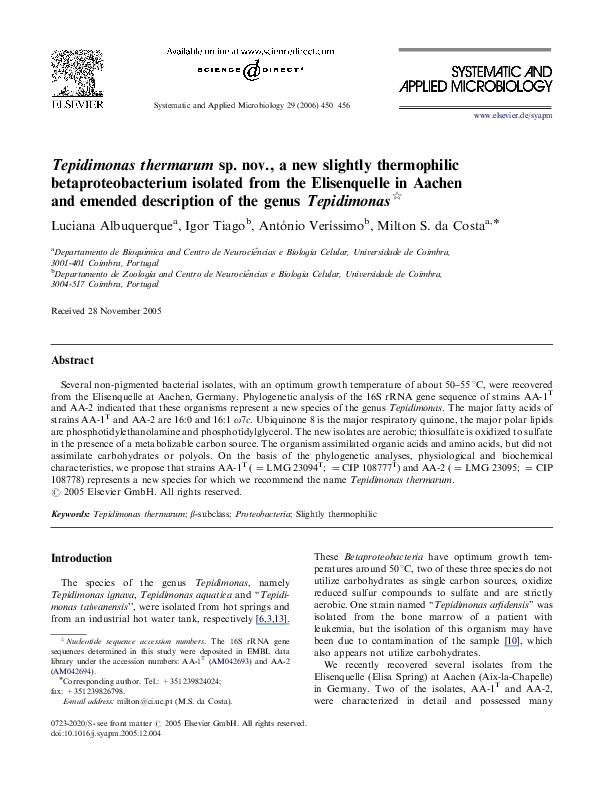
The taxonomic classification of Thermotolerant Tepidimonas species is pivotal in microbiological studies, as it lays the groundwork for understanding their evolutionary relationships and ecological niches. Recent corrections to taxonomic data, as highlighted in the publication’s addendum, bring attention to the importance of accurate bacterial classification for effective research and clinical application. An updated taxonomy not only aids in identifying specific strains but also informs about their potential roles in both health and disease.
Moreover, enhancing our taxonomic understanding of Tepidimonas sp. can facilitate more targeted research initiatives across various fields, from environmental microbiology to clinical therapeutic development. Accurate taxonomic frameworks are essential for the scientific community to communicate effectively about these bacteria, ensuring that findings regarding their characteristics, pathogenicity, and ecological roles are consistently shared and evaluated.
Investigating the Pathogenic Potential of Tepidimonas
Understanding the pathogenic mechanisms of Thermotolerant Tepidimonas bacteria is an emerging field in clinical microbiology. Reports indicate that while many strains are harmless commensals, there exists potential for certain species to act as opportunistic pathogens under specific conditions, especially in individuals with compromised immune responses. This duality highlights the complexity of Tepidimonas sp. and necessitates detailed investigation into their virulence factors and the conditions that may lead to pathogenicity.
Researching the interactions between Tepidimonas and the human host is crucial in deciphering the organism’s role in infectious diseases. Such investigations can lead to the development of targeted therapies and preventive measures, steering clear of unnecessary broad-spectrum antibiotics that further exacerbate antibiotic resistance. As the field grows, ongoing studies should focus on the clinical implications of Tepidimonas infections and the need for vigilant monitoring of human respiratory specimens.
Environmental Impact on Tepidimonas Species
The environment plays a pivotal role in shaping the characteristics and distribution of Thermotolerant Tepidimonas bacteria. These organisms are often isolated from thermal environments and their unique adaptations allow them to thrive in conditions that would be detrimental to most common pathogens. Understanding these environmental factors can provide insights into how these bacteria interact with other microorganisms and influence the overall microbial landscape.
Furthermore, changes in environmental conditions due to climate change or human activity may directly impact the prevalence and pathogenicity of Tepidimonas species. As urbanization increases and temperatures rise, the risk of novel bacterial detections in clinical settings also surges. Research initiatives must adapt to these changes, focusing on how environmental dynamics affect the behavior of Tepidimonas in human hosts and its implications for public health.
Clinical Implications of Detecting Tepidimonas Bacteria
The clinical implications of detecting Thermotolerant Tepidimonas bacteria in human samples are significant, particularly in respiratory diagnostic practices. The presence of these bacteria could alter treatment protocols and highlight the necessity for specific antibiotic stewardship strategies. Moreover, as understanding of these organisms expands, clinicians must be prepared to navigate the evolving landscape of microbial resistance and virulence associated with Tepidimonas.
Additionally, accurate detection of Tepidimonas species is essential for improving public health responses, especially in regions frequently affected by respiratory infections. Investing in diagnostic innovations will allow healthcare systems to manage outbreaks more effectively and provide timely interventions for at-risk populations. As we gain more insights into the clinical relevance of these bacteria, proactive measures can be instituted to safeguard health against potential pathogens.
Future Research Directions for Tepidimonas
Future research on Thermotolerant Tepidimonas bacteria must delve deeper into their genetic and phenotypic diversity to fully understand their implications in human health. As ongoing studies unveil exciting new data, it is vital to adopt a multidimensional research approach encompassing molecular biology, ecology, and clinical microbiology. This will ensure a comprehensive understanding of Tepidimonas sp. and their potential roles in infectious diseases.
Furthermore, cross-disciplinary collaborations will be crucial in advancing our knowledge of these bacteria. Studying Tepidimonas across various contexts—environmental, clinical, and evolutionary—will produce a well-rounded perspective, ultimately leading to improved diagnostic, therapeutic, and preventive strategies. As we venture into the future, embracing innovative research methodologies will be key to unlocking the mysteries surrounding Thermotolerant Tepidimonas and their impact on human health.
Frequently Asked Questions
What are Thermotolerant Tepidimonas Bacteria?
Thermotolerant Tepidimonas Bacteria are a group of novel bacteria identified for their ability to thrive in moderately high temperatures. These bacteria, particularly species within the Tepidimonas genus, have garnered attention due to their unique characteristics and potential implications in clinical microbiology.
How were Thermotolerant Tepidimonas Bacteria detected in human respiratory specimens?
The detection of Thermotolerant Tepidimonas Bacteria in human respiratory specimens involved advanced microbiological techniques that focus on isolating these novel bacteria from samples collected in Hong Kong. This groundbreaking research was reported in the journal ‘Emerg Infect Dis’, highlighting its significance in understanding human-associated bacteria.
Why is the discovery of Tepidimonas sp. important for human health?
The discovery of Tepidimonas sp. is important for human health because these thermotolerant bacteria may contribute to our understanding of respiratory infections and microbial diversity in the human microbiome. Identification of such bacteria allows for better diagnostics and potential treatments for respiratory diseases.
Where can I find the latest information about Thermotolerant Tepidimonas Bacteria?
The latest information about Thermotolerant Tepidimonas Bacteria can be found in scientific journals such as ‘Emerg Infect Dis’, which published a correction on the taxonomic classification of these bacteria. Keeping updated with such publications is essential for recent findings and research advancements.
What is the significance of the correction regarding Thermotolerant Tepidimonas Bacteria in the publication?
The significance of the correction regarding Thermotolerant Tepidimonas Bacteria in the publication underscores the importance of accurate taxonomic information in microbiology. It ensures that researchers and clinicians are using the correct classifications for effective study and treatment of related bacterial infections.
Are Thermotolerant Bacteria relevant to environmental studies?
Yes, Thermotolerant Bacteria, including Tepidimonas sp., are relevant to environmental studies as they can inform researchers about microbial adaptability to temperature changes in various ecosystems. Their role in biogeochemical cycles can also impact ecological health and climate responses.
How can Thermotolerant Tepidimonas Bacteria impact future research?
Thermotolerant Tepidimonas Bacteria can impact future research by providing insights into novel microbial functionalities and their mechanisms in human health and disease. As more is uncovered about their role, they may lead to new therapeutic avenues and improve diagnostic methods for respiratory illnesses.
What are the challenges in studying Tepidimonas sp. and similar thermotolerant bacteria?
Challenges in studying Tepidimonas sp. and similar thermotolerant bacteria include their relatively rare detection in human specimens and the need for specialized laboratory techniques. Furthermore, understanding their pathogenic potential requires extensive research to establish safety and health implications.
| Key Point | Details |
|---|---|
| Correction Notice | This notice is regarding an omission of essential taxonomic information in the article on Thermotolerant Tepidimonas sp. Bacteria. |
| Original Study | The study titled “Detection of Novel Thermotolerant Tepidimonas sp. Bacteria in Human Respiratory Specimens, Hong Kong, China, 2024” authored by K.H.-Y. Chiu et al. |
| Publication Details | The original article has been published and corrected online with a DOI reference. |
| Reference Information | Citation: Correction: Vol. 32, No. 1. Emerg Infect Dis. 2026 Feb 2026. DOI: 10.3201/eid3202.c13202 |
Summary
Thermotolerant Tepidimonas Bacteria are important microorganisms that have been identified in human respiratory specimens, which highlights their significance in the field of infectious diseases. The recent correction to the relevant article ensures that accurate taxonomic information related to these bacteria is available to researchers and healthcare professionals. Understanding Thermotolerant Tepidimonas Bacteria aids in further investigations into their ecological roles and potential impacts on human health.
The content provided on this blog (e.g., symptom descriptions, health tips, or general advice) is for informational purposes only and is not a substitute for professional medical advice, diagnosis, or treatment. Always seek the guidance of your physician or other qualified healthcare provider with any questions you may have regarding a medical condition. Never disregard professional medical advice or delay seeking it because of something you have read on this website. If you believe you may have a medical emergency, call your doctor or emergency services immediately. Reliance on any information provided by this blog is solely at your own risk.